
 Back
Back 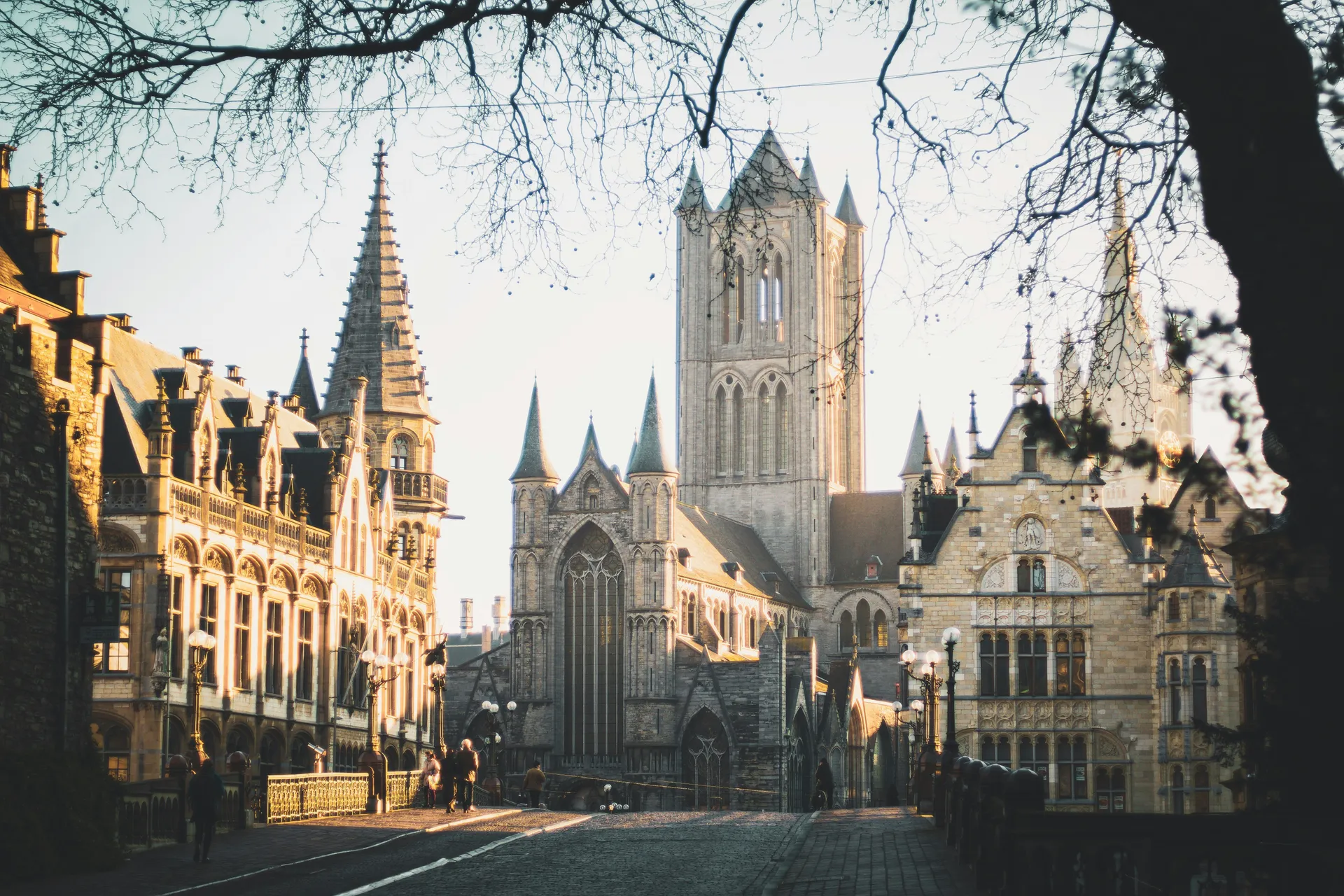
Ghent
Belgium
City Overview
Ghent: A medieval Flemish gem where canals, castles, and cutting-edge culture collide.
Access:
- By air: Fly into Brussels Airport (BRU) or Brussels South Charleroi Airport (CRL), then take a 1-hour train or bus to Ghent.
- By train: Direct high-speed (Thalys/ICE) or regional trains from Brussels (30–45 min), Antwerp (1 hr), Bruges (30 min), or Paris (2.5 hrs).
Districts/Zones:
- Historic Center (Gravensteen & Graslei/Korenlei): Medieval core with the Gravensteen castle, Gothic churches (St. Bavo’s, St. Nicholas’), and the iconic Graslei/Korenlei waterfront.
- South of the Center (Sint-Pieters & Zuid): Student hub (Ghent University), modern bars, the SMAK contemporary art museum, and the sprawling Citadelpark.
- Port Area (Dampoort & Muide): Industrial-chic waterfront with repurposed warehouses, the STAM city museum, and emerging nightlife (e.g., De Vooruit).
Quick Booking
Weather Forecast
Practical Information
Emergency Contact Numbers
Currency & Conversion

Electrical Plugs
Culture & Etiquette
Cultural Summary of Ghent
Historical Identity
Ghent is a historic Flemish city with medieval roots. It flourished as a major European trade hub in the Middle Ages, particularly in wool and textiles.
The city was a center of political and artistic influence, especially during the Burgundian era. Its rich past is visible in its well-preserved architecture, blending Gothic and Renaissance styles.
Ghent also played a key role in the Protestant Reformation and later industrialization. Today, it balances tradition with a vibrant, youthful energy due to its large student population.
Three Major Cultural Sites or Museums
Gravensteen Castle
- A 12th-century fortress with a dark history.
- Offers panoramic views of the city.
- Features a museum on medieval justice and torture.
Saint Bavo’s Cathedral (Sint-Baafskathedraal)
- Houses the famous Adoration of the Mystic Lamb by the Van Eyck brothers.
- A masterpiece of Flemish Primitive art.
- The cathedral itself is a stunning Gothic structure.
STAM (Ghent City Museum)
- Chronicles Ghent’s history from the Middle Ages to the present.
- Interactive exhibits and a large city model.
- Located in a former 14th-century abbey.
Iconic Local Gastronomy
Cuberdon (Ghent Nose)
- A cone-shaped, raspberry-flavored candy.
- Soft inside, with a hard sugar shell.
- A beloved local treat.
Waterzooi
- A creamy stew originally made with fish (now also chicken).
- Traditionally from Ghent.
- Served with bread or potatoes.
Gentse Mokken
- Small, sweet almond cakes.
- Often enjoyed with coffee.
- A classic Ghent pastry.