
 Back
Back 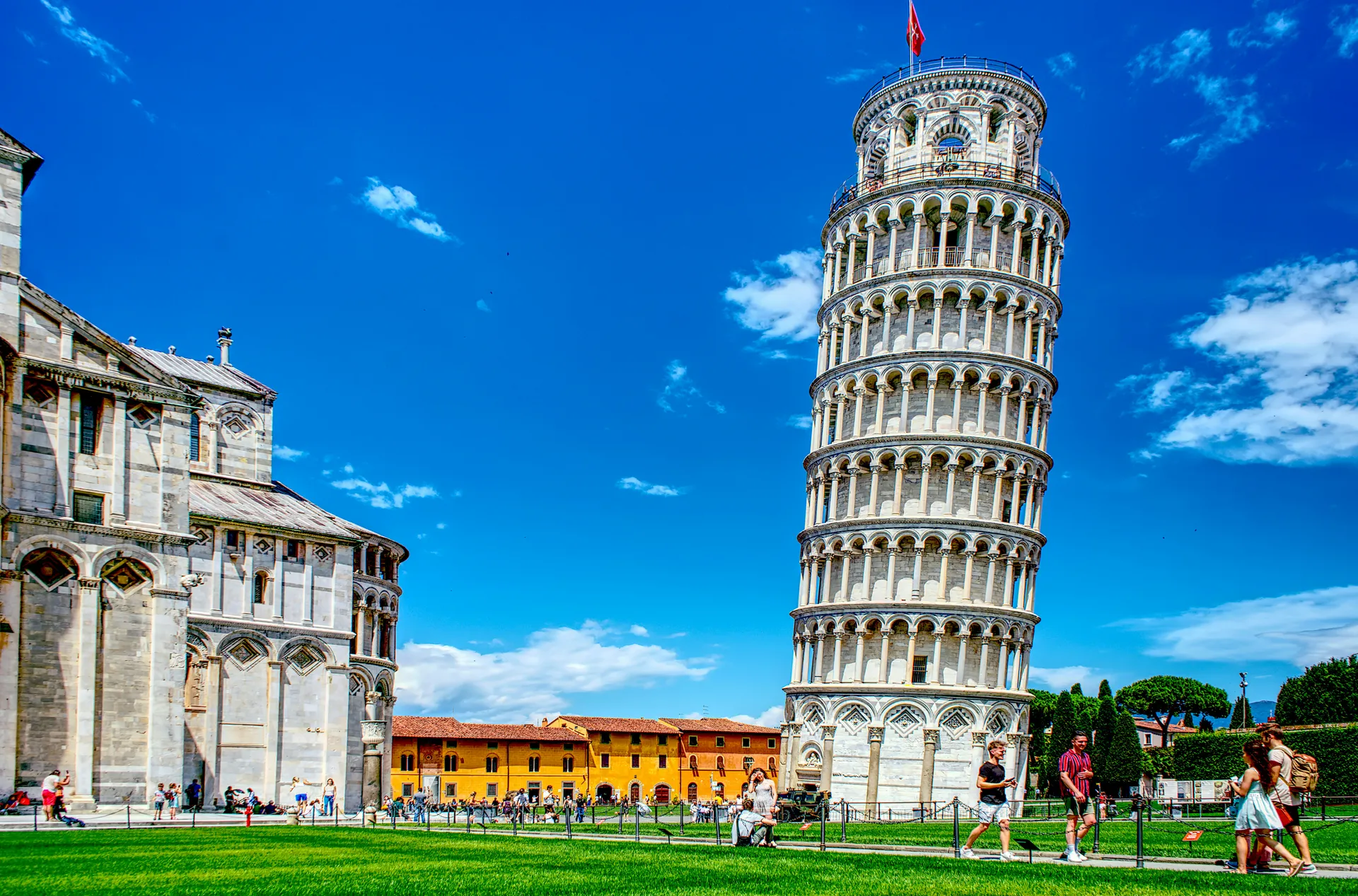
Pisa
Italy
City Overview
Pisa: Italy’s iconic leaning marvel, where medieval grandeur meets Tuscan charm in a compact, walkable city.
Main access routes:
- By air: Galileo Galilei International Airport (PSA), 2 km south of the city center—direct flights from major European hubs.
- By train: Pisa Centrale station, a 10-minute walk from Piazza dei Miracoli, with high-speed (Frecciarossa) and regional links to Florence (1h), Rome (2.5h), and Genoa (2h).
Three core zones/districts:
- Piazza dei Miracoli (Square of Miracles): The tourist epicenter—home to the Leaning Tower, Duomo, Baptistery, and Camposanto Monumentale. Crowded but unmissable.
- Centro Storico (Historic Center): North of the Arno River—narrow medieval streets, Borgo Stretto (shopping/dining), Piazza dei Cavalieri (scenic square), and the University of Pisa’s historic buildings.
- San Francesco/Sant’Antonio: Residential/bohemian areas south of the Arno—local vibe, fewer tourists, and key sites like the Church of Santa Maria della Spina (Gothic jewel) and Giardino Scotto (public park).
Quick Booking
Weather Forecast
32 °C
Practical Information
Emergency Contact Numbers
Police : 112
Fire : 112
Ambulance : 112
Currency & Conversion

0.88 EUR
Electrical Plugs
Voltage : Not available
Plug Type : C,F,L
Culture & Etiquette
Cultural Summary of Pisa
Historical Identity
Pisa is a historic city in Tuscany, Italy. It rose to prominence as a maritime republic in the Middle Ages. Its golden age was between the 11th and 13th centuries. The city was a major naval power and a center of trade, art, and learning. Pisa’s decline began after its defeat by Genoa in 1284. Today, it retains its medieval charm and intellectual legacy, home to one of Europe’s oldest universities.
Three Major Cultural Sites or Museums
Piazza dei Miracoli (Square of Miracles)
- A UNESCO World Heritage Site.
- Features the Leaning Tower, Cathedral of Santa Maria Assunta, and Baptistery.
- A masterpiece of Romanesque architecture.
Museo dell’Opera del Duomo
- Houses original sculptures and artifacts from the cathedral and baptistery.
- Includes works by Nicola and Giovanni Pisano.
Museo Nazionale di San Matteo
- Displays medieval and Renaissance art.
- Features paintings by Tuscan masters like Simone Martini and Masaccio.
Iconic Local Gastronomy
- Cecina – A savory chickpea flatbread.
- Bordatino – A thick soup with cornmeal, beans, and vegetables.
- Torta co’ bischeri – A sweet pie with rice, chocolate, and raisins.
- Pisan-style fish dishes – Often prepared with local seafood.