
 Back
Back 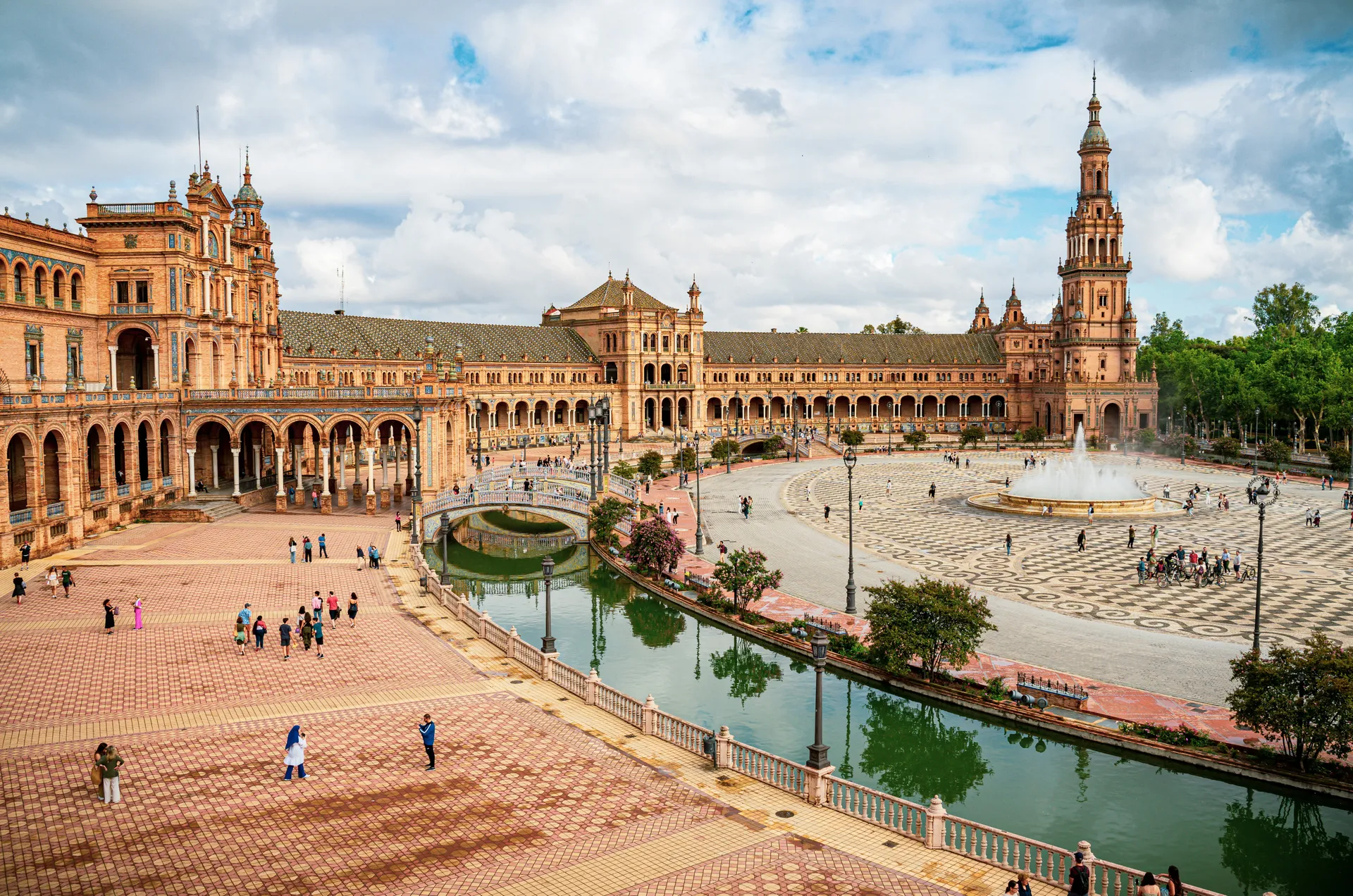
Seville
Spain
City Overview
Seville: A sun-drenched Andalusian jewel where Moorish grandeur meets flamenco soul.
How to access:
- By air – Seville Airport (SVQ), 10 km northeast of the city, with direct flights to major European hubs.
- By train – Santa Justa station, a high-speed AVE hub (2.5h from Madrid, 1.5h from Córdoba).
Three main zones/districts:
- Casco Antiguo (Historic Center) – Heart of Seville: Cathedral, Alcázar, Barrio Santa Cruz (Jewish Quarter), and Plaza de España.
- Triana – Across the Guadalquivir River; working-class roots, flamenco birthplace, and ceramics tradition.
- Nervión – Modern, upscale district with shopping (El Corte Inglés), business hubs, and the University of Seville’s main campus.
Quick Booking
Weather Forecast
Practical Information
Emergency Contact Numbers
Currency & Conversion

Electrical Plugs
Culture & Etiquette
Cultural Summary of Seville
Historical Identity
Seville is a city shaped by centuries of layered history.
It was a major Roman settlement (Hispalis) before becoming a key Moorish stronghold (Ishbiliya) under Muslim rule. The Reconquista in 1248 brought Christian rule, and Seville flourished as a global trading hub during Spain’s Golden Age. Its port connected Europe to the Americas, making it one of the wealthiest cities in the world.
Today, Seville blends its Moorish, Christian, and colonial past into a vibrant cultural identity.
Three Major Cultural Sites & Museums
Real Alcázar
- A stunning palace complex with Moorish, Gothic, and Renaissance architecture.
- Features intricate tilework, lush gardens, and royal chambers still used by Spain’s monarchy.
Seville Cathedral & Giralda
- The largest Gothic cathedral in the world.
- Built on the site of a former mosque, its bell tower (Giralda) is a remnant of Islamic Seville.
- Houses Christopher Columbus’s tomb.
Museo de Bellas Artes (Museum of Fine Arts)
- One of Spain’s most important art museums.
- Focuses on Spanish Baroque painting, including works by Murillo and Zurbarán.
Iconic Local Gastronomy
Tapas – Small, flavorful dishes served in bars. Must-tries:
- Espinacas con garbanzos (spinach with chickpeas).
- Salmorejo (thick, chilled tomato soup).
- Pescaíto frito (fried fish).
Sweet Treats
- Tortas de aceite (olive oil pastries).
- Pestiños (honey-coated fried dough).
Drinks
- Rebujito (a mix of sherry and soda, popular during Feria de Abril).
- Tinto de verano (red wine with soda).