
 Back
Back 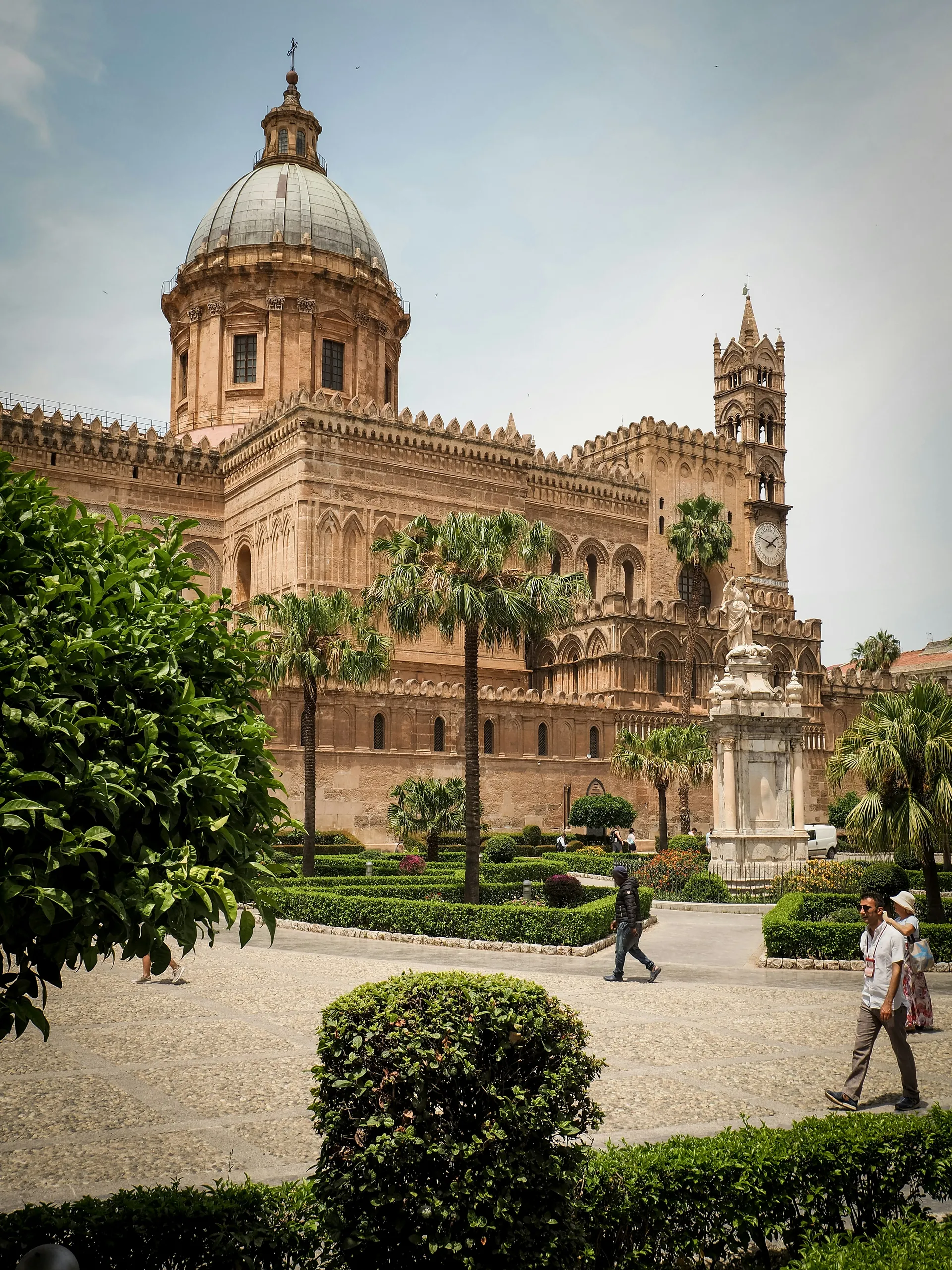
Palermo
Italy
City Overview
Palermo: A chaotic yet vibrant Sicilian capital where Arab-Norman grandeur collides with gritty street life.
How to access it:
- By air: Falcone-Borsellino Airport (PMO), 35 km west of the city, with domestic/international flights and bus/taxi connections.
- By sea: Port of Palermo, a major hub for ferries from Naples, Genoa, Sardinia, and Tunisia (Grandi Navi Veloci, Grimaldi, GNV).
Three main zones/districts:
- Historic Center (Centro Storico): Crumbling palaces, Baroque churches (e.g., Quattro Canti), and markets (Ballarò, Vucciria) in a dense, labyrinthine grid.
- New Town (Liberty/Politeama): 19th-century bourgeois expansion with wide boulevards (Via Libertà), Art Nouveau villas, and upscale shopping.
- Waterfront (La Cala/Kalsa): Revitalized port area with the Norman Palace, Foro Italico promenade, and the gritty-but-trendy Kalsa district (Arab roots, street art).
Quick Booking
Weather Forecast
31 °C
Practical Information
Emergency Contact Numbers
Police : 112
Fire : 112
Ambulance : 112
Currency & Conversion

0.88 EUR
Electrical Plugs
Voltage : Not available
Plug Type : C,F,L
Culture & Etiquette
Cultural Summary of Palermo
Historical Identity
Palermo is a city layered with history. Founded by the Phoenicians, it later flourished under Arab, Norman, and Spanish rule.
Its architecture and traditions reflect this diverse past. The city was once the capital of the Kingdom of Sicily. Today, it remains a vibrant cultural crossroads.
Three Major Cultural Sites or Museums
Palermo Cathedral
- A mix of architectural styles, from Norman to Gothic.
- Houses royal tombs, including that of Frederick II.
Palazzo dei Normanni (Norman Palace)
- One of the oldest royal residences in Europe.
- Features the stunning Palatine Chapel, with Byzantine mosaics.
Regional Archaeological Museum (Antonino Salinas Museum)
- Displays artifacts from Sicily’s ancient civilizations.
- Includes Greek, Roman, and Phoenician collections.
Iconic Local Gastronomy
- Arancini – Deep-fried rice balls, often stuffed with ragù or mozzarella.
- Pasta alla Norma – Pasta with eggplant, ricotta salata, and tomato sauce.
- Cannoli – Crispy pastry tubes filled with sweet ricotta.
- Panelle – Chickpea fritters, a popular street food.
- Sfincione – A thick, Sicilian-style pizza with onions and anchovies.
Palermo’s food blends Arab, Norman, and Italian influences. Markets like Ballarò and Vucciria offer authentic flavors.