
 Back
Back 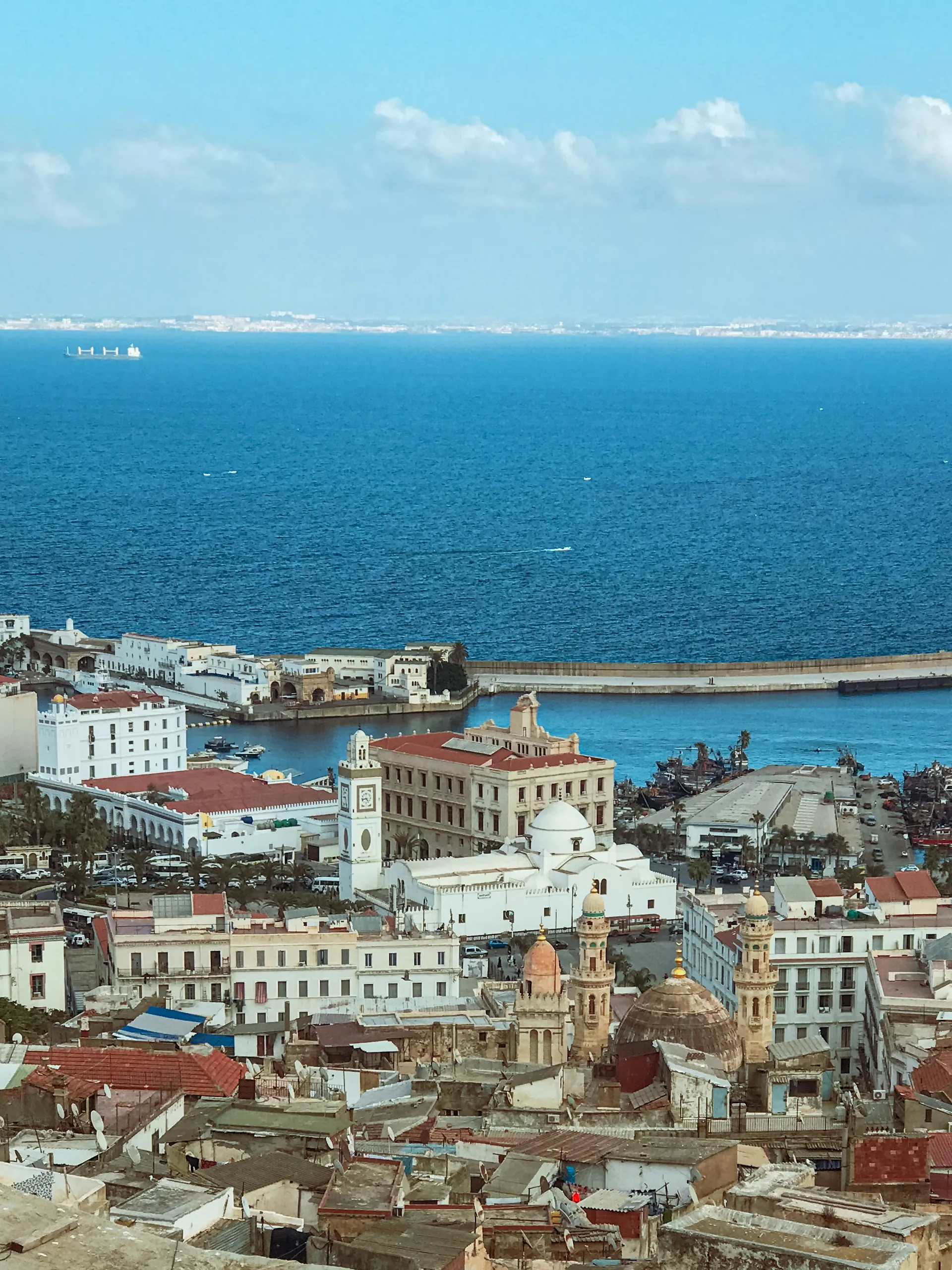
Algiers
Algeria
City Overview
Algiers: A sun-baked Mediterranean capital where French colonial grandeur collides with North African grit.
Access
- By air: Houari Boumediene Airport (ALG), 20 km southeast of the city, served by international and domestic flights.
- By sea: Port of Algiers, with ferry connections to Marseille, Alicante, and Barcelona (operated by Algerie Ferries and others).
Districts
- Casbah (Old City): UNESCO-listed labyrinth of Ottoman-era palaces, mosques, and crumbling whitewashed houses; chaotic, steep, and pedestrian-only.
- Central Algiers (Downtown): French colonial core with wide boulevards, 19th-century architecture (e.g., Grande Poste, Palais des Raïs), and commercial hubs.
- Hydra/El Biar (Upscale Suburbs): Affluent residential areas with embassies, luxury villas, and modern amenities; safer and less congested.
Quick Booking
Weather Forecast
Practical Information
Emergency Contact Numbers
Currency & Conversion

Electrical Plugs
Culture & Etiquette
Cultural Summary of Algiers
Historical Identity
Algiers is a city layered with history. Founded by the Phoenicians, it later became a Roman settlement before flourishing under Berber dynasties.
The Ottoman era (16th–19th centuries) shaped its identity as a Mediterranean power. French colonial rule (1830–1962) left a lasting architectural and cultural imprint.
Today, Algiers blends Arab, Berber, and European influences. Its old quarter, the Casbah, is a UNESCO World Heritage Site—symbolizing its rich, complex past.
Three Major Cultural Sites & Museums
The Casbah of Algiers
- A historic fortress and labyrinthine old town.
- Features Ottoman palaces, mosques, and traditional houses.
- UNESCO-listed for its cultural significance.
Bardo National Museum of Prehistory and Ethnography
- Houses artifacts from Algeria’s ancient civilizations.
- Includes Berber, Roman, and Islamic exhibits.
- Offers insight into the region’s diverse heritage.
Ketchoua Mosque (Great Mosque of Algiers)
- One of the oldest mosques in the city (11th century).
- Blends Almoravid and Ottoman architectural styles.
- A key religious and historical landmark.
Iconic Local Gastronomy
- Couscous – A staple dish, often served with lamb, vegetables, and spicy harissa.
- Chorba – A hearty soup with meat, tomatoes, and herbs.
- Rechta – Handmade noodles with chicken, chickpeas, and cinnamon.
- Mhadjeb – Thin, stuffed pancakes, a popular street food.
- Makrout – Date-filled semolina pastries, often fried or baked.
Sweet treats include baklava and kalb el louz (almond semolina cake). Mint tea is the traditional drink.