
 Back
Back 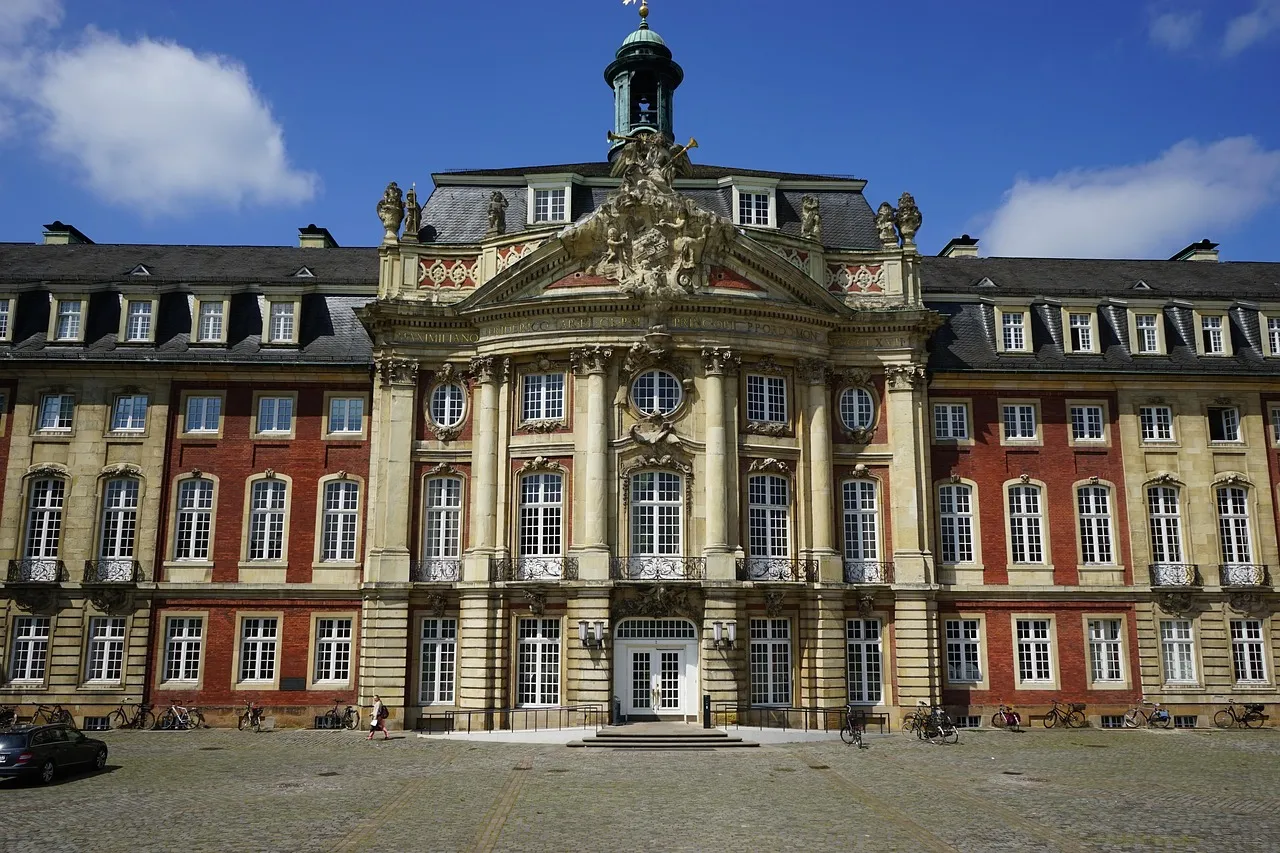
Münster
Germany
City Overview
Münster: Germany’s vibrant university city blending medieval charm with youthful energy.
Access:
- By air: Münster Osnabrück International Airport (FMO), 25 km north, with direct flights to major European hubs.
- By train: Central Station (Hauptbahnhof) is a key ICE/regional rail hub, with direct connections to Berlin, Hamburg, Cologne, and Amsterdam.
Districts/Zones:
- Altstadt (Old Town): Historic core with cobbled streets, the Prinzipalmarkt (iconic gabled houses), St. Paulus Dom, and the 13th-century Town Hall.
- Kreuzviertel: Trendy, student-heavy area with Art Nouveau architecture, cafés, and the Aasee lake for recreation.
- Hansaviertel & Hafen (Port District): Modern, revitalized zone with industrial-chic bars, galleries, and the city’s nightlife hub.
Quick Booking
Weather Forecast
Practical Information
Emergency Contact Numbers
Currency & Conversion

Electrical Plugs
Culture & Etiquette
Cultural Summary of Münster, Germany
Historical Identity
Münster is a city with deep historical roots, shaped by its medieval past and religious significance. Founded in 793 as a missionary outpost, it became a key center of the Hanseatic League and a hub of trade and learning. The city is famously linked to the Anabaptist movement of the 16th century, a radical Reformation era that left a lasting mark. Today, Münster blends its rich history with a vibrant, youthful energy—thanks to its large student population—while maintaining a strong Catholic tradition.
Three Major Cultural Sites & Museums
St. Paulus Dom (St. Paul’s Cathedral)
- A stunning Gothic and Romanesque cathedral.
- Houses the Astronomical Clock, a 16th-century marvel with moving figures.
- Offers panoramic views from its tower.
Picasso Museum Münster
- Dedicated to graphic works by Pablo Picasso.
- Features over 800 prints, including etchings and lithographs.
- One of the few museums worldwide focused solely on Picasso’s graphic art.
LWL-Museum für Kunst und Kultur (LWL Museum of Art and Culture)
- Covers 1,000 years of art history, from medieval to contemporary.
- Highlights include works by August Macke (a key German Expressionist).
- Houses a notable collection of religious art and sculptures.
Iconic Local Gastronomy
Münsterländer Töttchen
- A traditional pork blood sausage with offal, served with onions and bread.
- A hearty, rustic dish with deep regional roots.
Pfefferpotthast
- A spiced beef stew with pepper, cloves, and raisins.
- Often served with pickles and dark bread.
Münster Cheese (Münsterkäse)
- A soft, pungent cheese with a strong aroma.
- Best enjoyed with rye bread or in local dishes.
Pumpernickel Bread
- A dark, dense rye bread with a slightly sweet, molasses-like flavor.
- A staple in Westphalian cuisine, often paired with cheese or cold cuts.
Local Beers
- Münster has a strong brewing tradition, with Pinkus Müller being the most famous brewery.
- Try Altbier (a dark, top-fermented beer) or seasonal specialties.