
 Back
Back 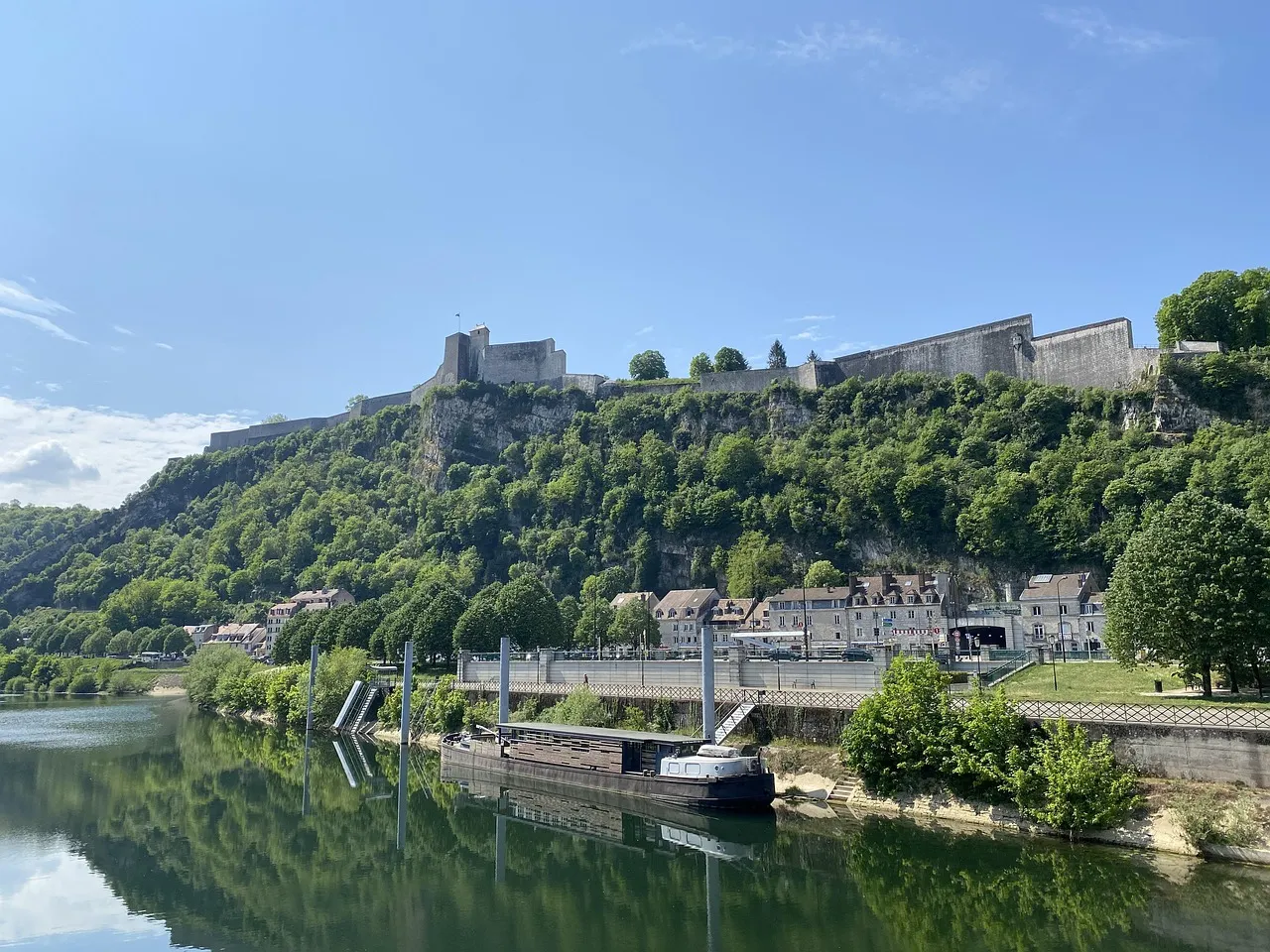
Besançon
France
City Overview
Besançon: A fortified gem of eastern France, blending Roman heritage, military history, and Alpine charm.
Access
- By train: Direct TGV links from Paris (2h), Lyon (2h), and Strasbourg (2.5h); regional trains connect to Dijon, Belfort, and Switzerland.
- By car: A36 highway (Mulhouse–Lyon) via exit 4 (Besançon-Planoise); A6 from Paris (4h) or A40 from Geneva (2h).
Districts
- La Boucle (The Loop): Historic heart encircled by the Doubs River, home to the Citadel, Roman ruins, and 18th-century architecture.
- Battant: Lively student quarter with bars, nightlife, and the Église Sainte-Madeleine; former working-class hub.
- Montrapon-Fontaine-Écu: Residential sprawl with modern amenities, shopping centers (e.g., Châteaufarine), and the Micropolis convention center.
Quick Booking
Weather Forecast
26 °C
Practical Information
Emergency Contact Numbers
Police : 112 or 17
Fire : 112 or 18
Ambulance : 112 or 15
Currency & Conversion

0.88 EUR
Electrical Plugs
Voltage : Not available
Plug Type : C,E
Culture & Etiquette
Cultural Summary of Besançon, France
Historical Identity
Besançon is a historic city in eastern France, shaped by its strategic location near the Swiss border.
Once a key Roman settlement, it later became a fortified stronghold under Vauban. The city thrived as a cultural and intellectual hub, particularly during the Enlightenment.
Its well-preserved old town reflects its rich past, blending medieval, Renaissance, and classical architecture.
Three Major Cultural Sites & Museums
Citadel of Besançon (La Citadelle)
- A UNESCO-listed Vauban fortress.
- Houses three museums:
- Musée de la Résistance et de la Déportation (WWII history).
- Muséum d’Histoire Naturelle (natural history).
- Musée Comtois (regional ethnography).
Besançon Fine Arts and Archaeology Museum (Musée des Beaux-Arts et d’Archéologie)
- One of France’s oldest public museums (1694).
- Features paintings, sculptures, and archaeological artifacts.
Time Museum (Musée du Temps)
- Dedicated to horology (clockmaking) and timekeeping.
- Located in the Palais Granvelle, a Renaissance landmark.
Iconic Local Gastronomy
- Saucisse de Morteau – A smoked sausage from the nearby Jura region.
- Poulet à la Comtoise – Chicken stew with local white wine and morel mushrooms.
- Gougères – Cheese puff pastries, often served as an appetizer.
- Vin Jaune – A distinctive oxidized white wine from the Jura.
- Comté Cheese – A nutty, aged cheese produced in the region.