
 Back
Back 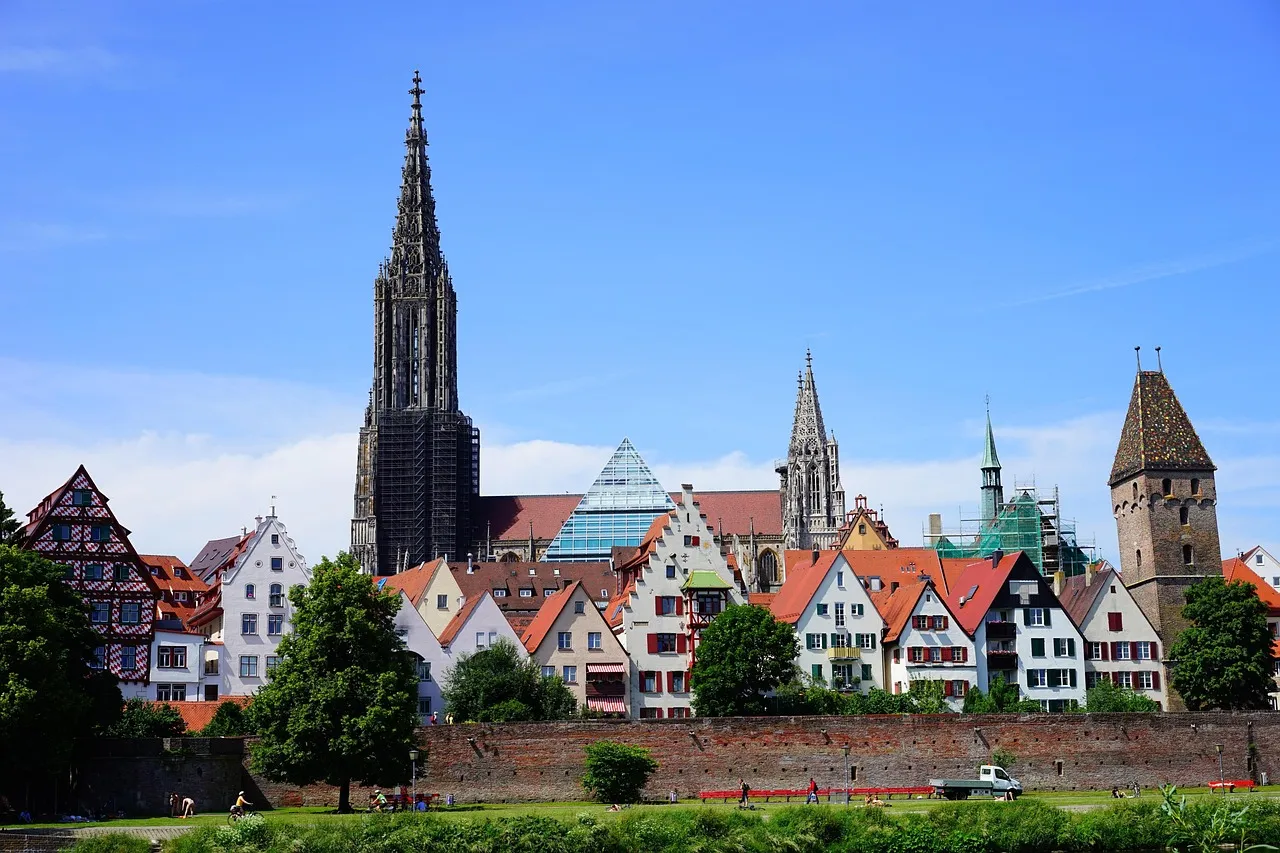
Ulm
Germany
City Overview
Ulm: Germany’s medieval gem where the Danube meets cutting-edge modernity.
How to get there:
- By air: Fly into Memmingen Airport (FMM) (30 min by bus) or Stuttgart Airport (STR) (1 hr by train).
- By train: Ulm Hauptbahnhof (main station) is a ICE/IC hub with direct links to Munich (1.5 hrs), Stuttgart (1 hr), and Frankfurt (2.5 hrs).
Three key zones/districts:
- Altstadt (Old Town) – Cobblestone streets, the Ulm Minster (tallest church in the world), and half-timbered houses; pedestrian-only core.
- Fischerviertel (Fishermen’s Quarter) – Canals, leaning medieval houses, and riverside cafés; most picturesque area.
- Neu-Ulm (Bavarian side) – Modern counterpart across the Danube, with shopping (e.g., Glacis-Galerie), parks, and the Edwin Scharff Museum.
Quick Booking
Weather Forecast
21 °C
Practical Information
Emergency Contact Numbers
Police : 110
Fire : 112
Ambulance : 112
Currency & Conversion

0.88 EUR
Electrical Plugs
Voltage : Not available
Plug Type : C,F
Culture & Etiquette
Cultural Summary of Ulm, Germany
Historical Identity
Ulm is a historic city on the Danube River, known for its medieval roots and strategic importance.
It was a Free Imperial City in the Holy Roman Empire. Its wealth came from trade, especially in textiles. The city played a key role in the Protestant Reformation. Ulm was heavily damaged in World War II but rebuilt while preserving its heritage.
Three Major Cultural Sites & Museums
Ulm Minster (Ulmer Münster)
- A Gothic masterpiece with the world’s tallest church steeple (161.53 m).
- Offers panoramic views after climbing 768 steps.
- Features intricate carvings and stained glass.
Weishaupt Gallery (Museum Weishaupt)
- A modern art museum with works from the 1945–2008 period.
- Focuses on abstract and contemporary pieces.
- Located near the Minster.
Ulm Museum (Museum der Stadt Ulm)
- Covers the city’s history from prehistoric times to today.
- Highlights include medieval artifacts and Renaissance art.
- Features the famous Lion Man, a 40,000-year-old ivory sculpture.
Iconic Local Gastronomy
Ulm Spargel (White Asparagus)
- A seasonal delicacy, often served with hollandaise sauce.
- Traditionally harvested in spring.
Maultaschen
- Swabian stuffed pasta, similar to large ravioli.
- Can be boiled, fried, or served in broth.
Schwäbischer Zwiebelkuchen (Swabian Onion Cake)
- A savory tart with onions, bacon, and cream.
- Often enjoyed with new wine in autumn.