
 Back
Back 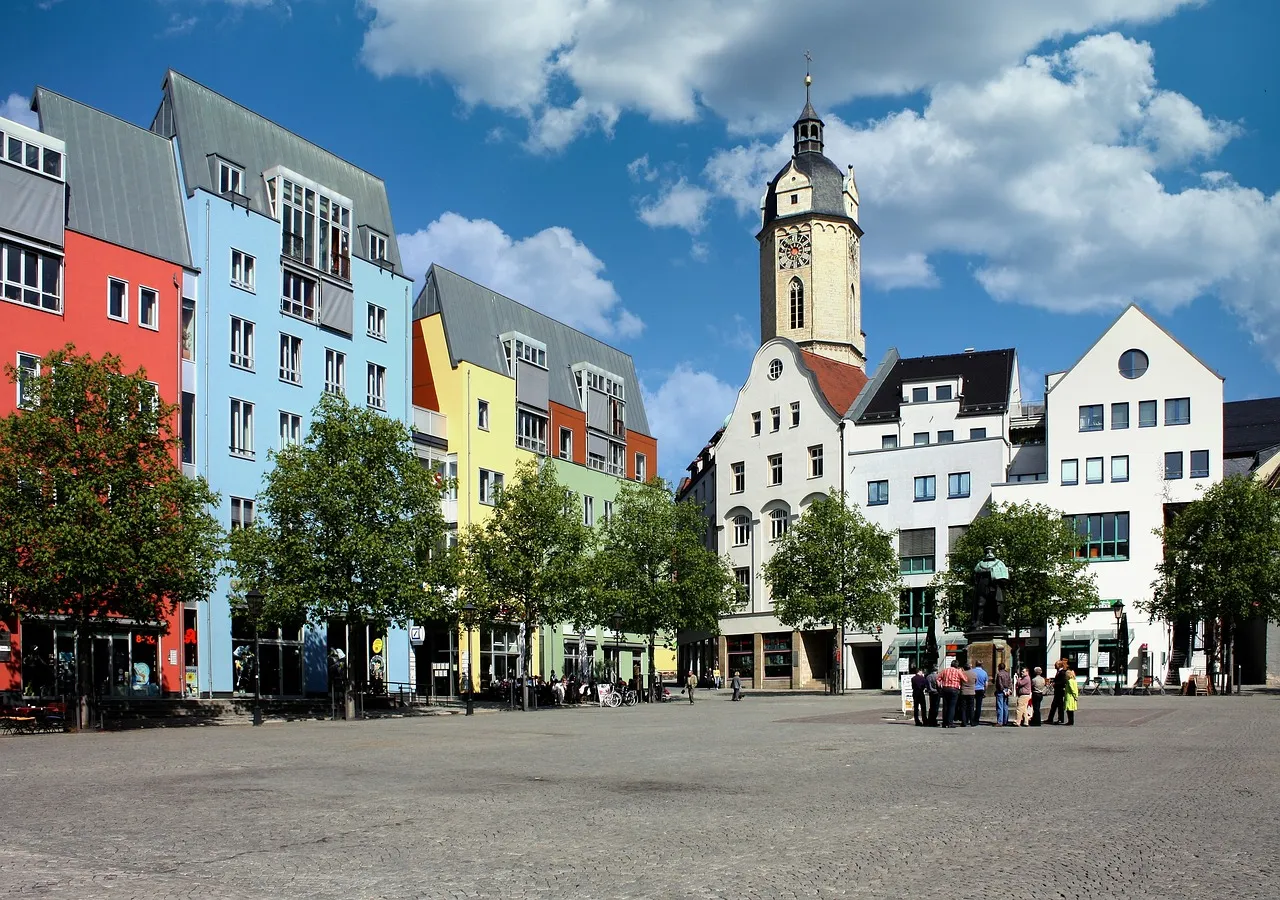
Jena
Germany
City Overview
Jena: Germany’s compact, science-driven university city nestled in a scenic Saale Valley.
Access:
- By train – Direct ICE/Regionalbahn connections from Berlin (2.5h), Leipzig (1h), and Frankfurt (3h); central station (Jena Paradies) is a 10-minute walk from the city center.
- By car – Via A9 (Berlin–Munich) or A4 (Dresden–Erfurt), with parking garages (Parkhaus Goethe Galerie, Parkhaus Löbdergraben) near the core.
Districts/Zones:
- City Center (Altstadt) – Historic core with medieval streets, market square (Marktplatz), landmarks (Town Hall, JenTower), and dense dining/shopping (Goethe Galerie mall).
- Weststadt (University Quarter) – Student hub around Ernst-Abbe-Platz, home to Friedrich Schiller University, research institutes (Max Planck, Leibniz), and budget eateries.
- Lobeda – Residential/science cluster 5km south, housing Jena University Hospital, Beutenberg Campus (biotech/photonics), and the Optical Museum.
Quick Booking
Weather Forecast
Practical Information
Emergency Contact Numbers
Currency & Conversion

Electrical Plugs
Culture & Etiquette
Cultural Summary of Jena, Germany
Historical Identity
Jena is a historic university city in Thuringia, Germany.
Its identity is deeply tied to academia and intellectual heritage. Founded in the 9th century, it became a center of learning in the 16th century with the establishment of the University of Jena (1558).
The city played a key role in German philosophy, literature, and science. Notable figures like Hegel, Schiller, Fichte, and Goethe lived or worked here. Jena was also a hub for the Romantic movement and early optical industries (e.g., Carl Zeiss).
Three Major Cultural Sites or Museums
Jenaer Romantik Museum
- Dedicated to Jena’s role in the German Romantic movement.
- Features works by Novalis, the Schlegel brothers, and Ludwig Tieck.
- Highlights the city’s literary and philosophical legacy.
Optisches Museum Jena
- Focuses on the history of optics and precision mechanics.
- Showcases innovations by Carl Zeiss, Ernst Abbe, and Otto Schott.
- Includes early microscopes, telescopes, and camera lenses.
Stadtmuseum Göhre (City Museum Göhre)
- Covers Jena’s urban and cultural history.
- Exhibits on the University of Jena, industrial development, and daily life.
- Features temporary exhibitions on local themes.
Iconic Local Gastronomy
Thuringian Rostbratwurst
- A grilled pork sausage, traditionally served with mustard and bread.
- Often accompanied by sauerkraut or potato salad.
Jenaer Klöße (Jena Dumplings)
- Potato dumplings with a crispy crust.
- A staple side dish in Thuringian cuisine.
Thuringian Sauerbraten
- Marinated pot roast, slow-cooked in a sweet-sour sauce.
- Served with red cabbage and dumplings.
Local Beers
- Jenaer Bier (traditional brews from local breweries).
- Often enjoyed in historic pubs near the university.