
 Back
Back 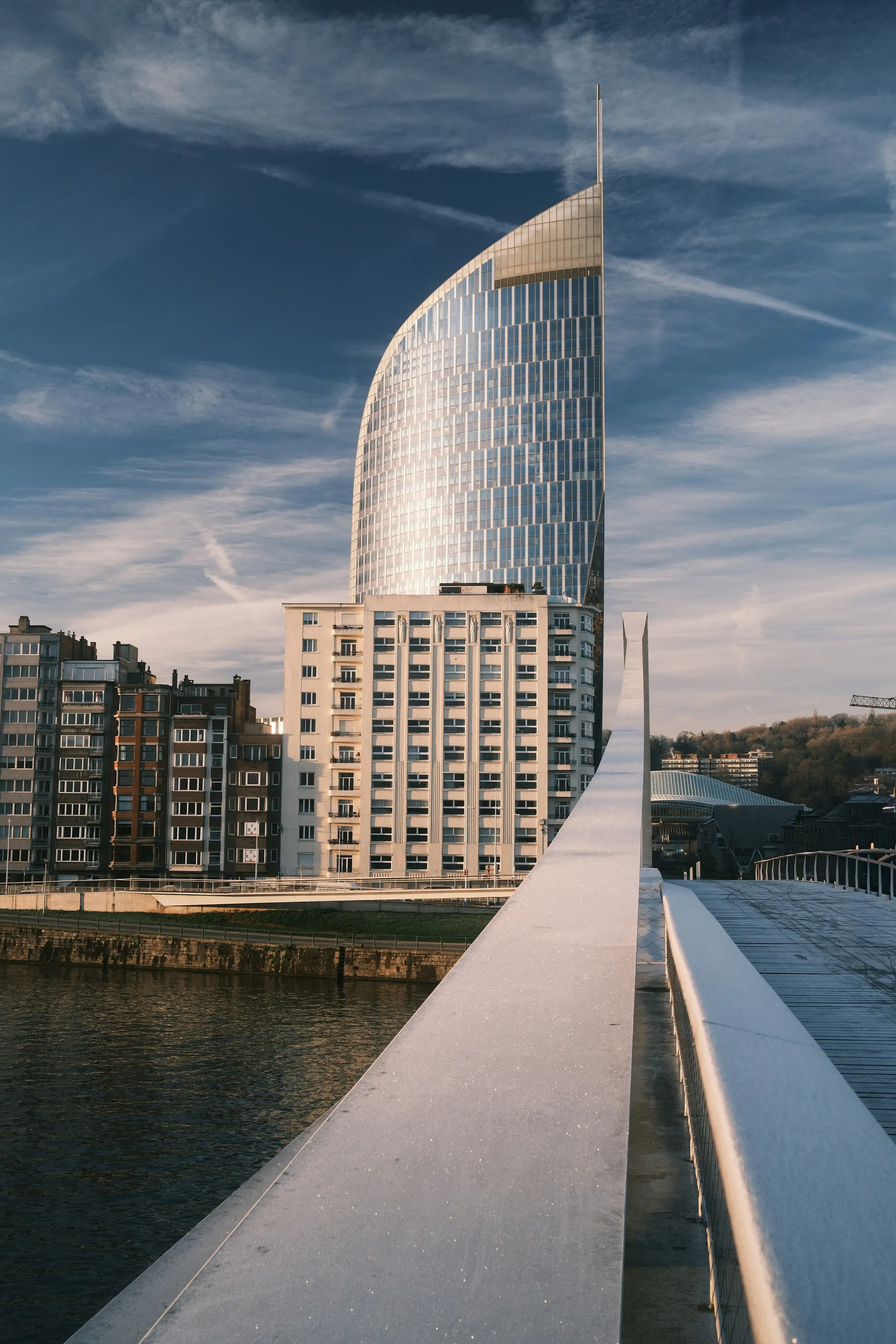
Liège
Belgium
City Overview
Liège: Belgium’s gritty, culture-packed gateway to the Ardennes—where industrial heritage meets riverside charm.
How to Access Liège
- By Air: Liège Airport (LGG) – a major cargo hub with limited passenger flights (mostly budget airlines like Ryanair).
- By Train: Liège-Guillemins – a high-speed rail hub (Thalys, ICE, Eurostar) connecting to Brussels (40 min), Paris (2.5 hrs), and Cologne (1 hr).
Three Main Zones/Districts
- City Center (Ville Haute & Ville Basse) – Historic core with the Montagne de Bueren (374-step staircase), Place Saint-Lambert (former cathedral site), and Outremeuse (bohemian riverside quarter, home to the Batte Market).
- Guillemins (Modern District) – Defined by Santiago Calatrava’s futuristic train station, surrounded by upscale hotels and business centers.
- Outskirts (Ardennes Foothills) – Côteaux de la Citadelle (panoramic views), Val Saint-Lambert (crystal glassworks), and Seraing (industrial past, now a tech/residential zone).
Quick Booking
Weather Forecast
22 °C
Practical Information
Emergency Contact Numbers
Police : 101 or 112
Fire : 112
Ambulance : 112
Currency & Conversion

0.88 EUR
Electrical Plugs
Voltage : Not available
Plug Type : C,E
Culture & Etiquette
Cultural Summary of Liège, Belgium
Historical Identity
Liège is a city with deep medieval roots and a strong industrial past.
It was a powerful ecclesiastical principality for over 800 years, ruled by prince-bishops. The city thrived as a center of trade, learning, and craftsmanship. Its strategic location along the Meuse River shaped its economic and cultural influence. Liège later became a key player in Belgium’s coal and steel industries. Today, it blends historic charm with a vibrant, modern urban identity.
Three Major Cultural Sites & Museums
Palais des Princes-Évêques (Prince-Bishops’ Palace)
- A grand architectural landmark.
- Reflects Liège’s political and religious history.
- Features a mix of Gothic and Renaissance styles.
- Houses government offices and a museum (Musée de l’Art Wallon).
Collégiale Saint-Barthélemy (St. Bartholomew’s Church)
- Home to the famous Baptismal Font of Liège (12th century).
- A masterpiece of Mosan art, made of brass and copper.
- One of the city’s oldest and most significant religious sites.
Grand Curtius Museum
- A multidisciplinary museum in a 17th-century mansion.
- Showcases archaeology, fine arts, and decorative arts.
- Highlights Liège’s artistic and industrial heritage.
Iconic Local Gastronomy
- Boulets-frites – Meatballs in a rich, tangy sauce, served with fries.
- Lütticher Waffle (Gaufre de Liège) – A dense, caramelized waffle with pearl sugar.
- Peket – A strong, juniper-flavored local gin.
- Herve Cheese – A pungent, creamy cheese from the nearby region.
- Sirop de Liège – A sweet, spiced fruit syrup, often used in desserts.