
 Back
Back 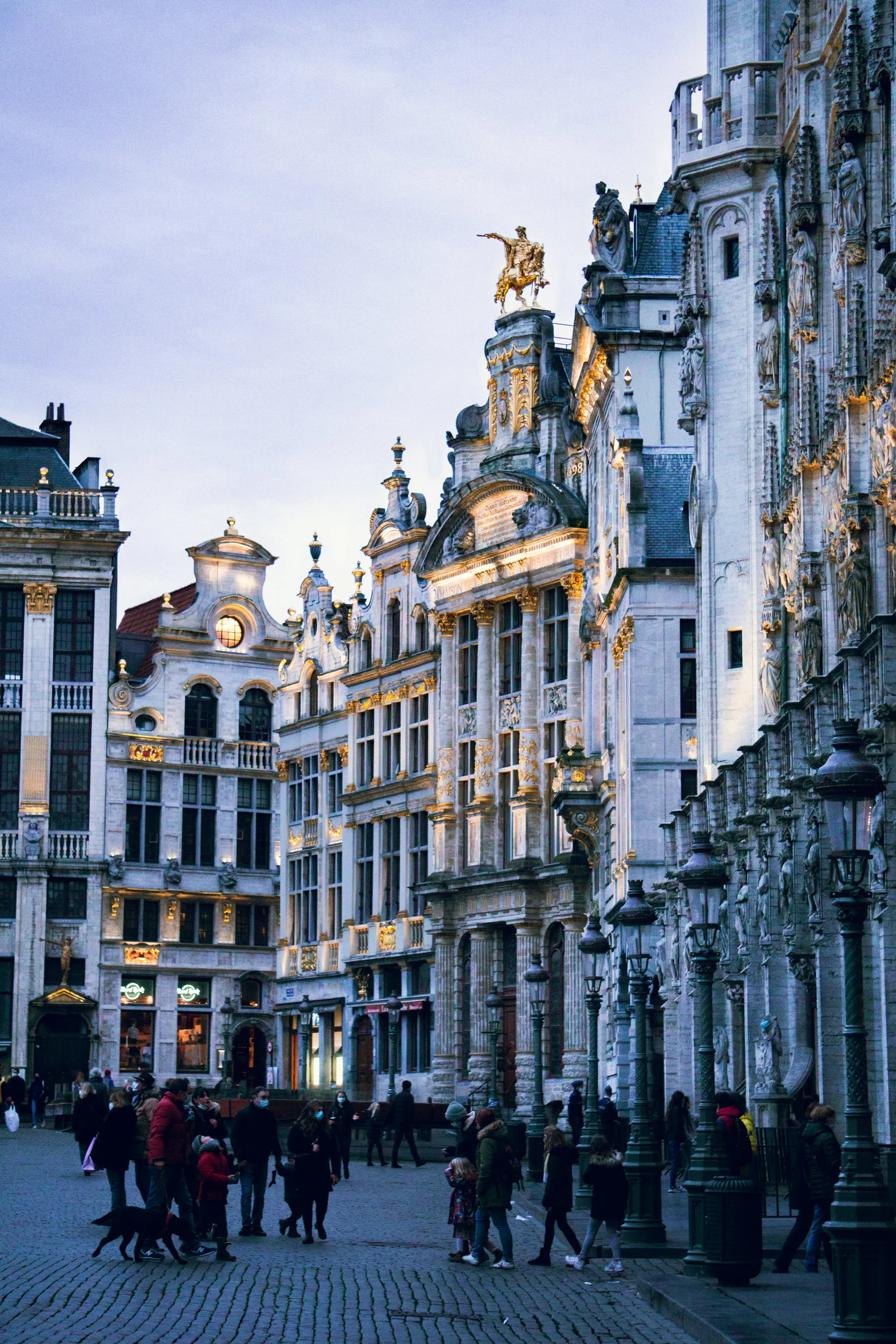
Brussels
Belgium
City Overview
Brussels: Europe’s political heartbeat and a vibrant mosaic of Art Nouveau, fries, and multilingual charm.
Two main ways to access it:
- By air: Brussels Airport (BRU) – 12 km northeast of the city, with direct rail links (15–20 mins to central stations).
- By train: High-speed rail (Thalys, Eurostar, ICE) to Brussels-South (Midi/Zuid) – the primary international hub, 15 mins from the city center via metro/tram.
Three main zones/districts:
- City Center (Pentagon): Core of historic Brussels – Grand Place, Manneken Pis, Royal Palace, and dense museums/shopping (Rue Neuve). Walkable but tourist-heavy.
- European Quarter (Leopold/EU District): East of the center – home to EU institutions (Parliament, Commission), modern glass towers, and expat-heavy areas (Place du Luxembourg, Schuman). Business-oriented, less "Belgian."
- Sablon & Marolles: Upscale (Sablon) vs. working-class (Marolles). Sablon: antique shops, Notre-Dame du Sablon church, and high-end dining. Marolles: flea markets (Place du Jeu de Balle), gritty charm, and affordable eats.
Quick Booking
Weather Forecast
Practical Information
Emergency Contact Numbers
Currency & Conversion

Electrical Plugs
Culture & Etiquette
Cultural Summary of Brussels
Historical Identity
Brussels is a city shaped by centuries of political and artistic influence.
It began as a small 10th-century fortress on the Senne River. By the 15th century, it became the capital of the Duchy of Brabant and later the Burgundian Netherlands. Under Habsburg rule, it flourished as a center of trade, art, and governance. The 19th century saw rapid modernization, with grand boulevards replacing medieval streets. Today, Brussels is the de facto capital of the European Union, blending historic charm with a cosmopolitan identity.
Three Major Cultural Sites & Museums
Grand Place (Grote Markt)
- The heart of Brussels, a UNESCO World Heritage site.
- Surrounded by opulent guildhalls and the Town Hall.
- Hosts the biennial Flower Carpet (a vibrant floral display).
Royal Museums of Fine Arts of Belgium
- A complex of six museums, including:
- Old Masters Museum (Flemish and Dutch art, e.g., Bruegel, Rubens).
- Magritte Museum (dedicated to surrealist René Magritte).
- One of the largest art collections in Europe.
- A complex of six museums, including:
Musical Instruments Museum (MIM)
- Housed in the Art Nouveau Old England building.
- Features over 8,000 instruments, from ancient to modern.
- Offers panoramic city views from its rooftop café.
Iconic Local Gastronomy
Moules-frites (Mussels & Fries)
- The national dish: steamed mussels with crispy Belgian fries.
- Served with mayonnaise or garlic butter.
Waffles (Gaufres)
- Two main types:
- Brussels waffle (light, crispy, rectangular).
- Liège waffle (denser, sweeter, with caramelized sugar).
- Topped with whipped cream, chocolate, or fruit.
- Two main types:
Frites (Belgian Fries)
- Double-fried for extra crispiness.
- Traditionally served in a paper cone with sauces (e.g., mayo, Andalouse).
Chocolate & Pralines
- Brussels is home to world-famous chocolatiers (e.g., Neuhaus, Pierre Marcolini).
- Pralines (filled chocolates) were invented here in 1912.
Beer
- Over 1,000 varieties, including lambic, gueuze, and Trappist beers.
- Delirium Café holds the Guinness World Record for most beers on tap.