
 Back
Back 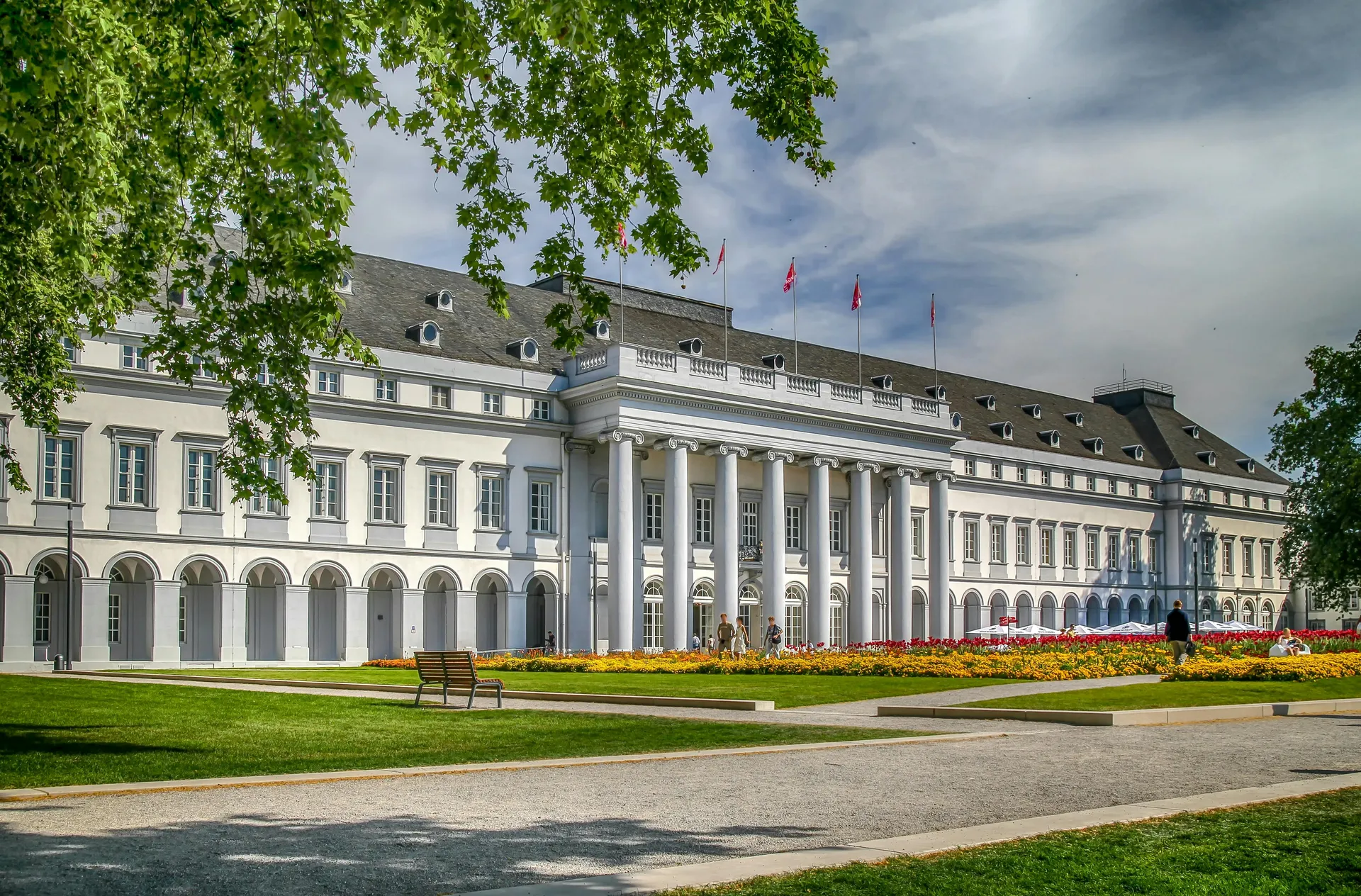
Koblenz
Germany
City Overview
Koblenz: Where the Rhine and Moselle rivers collide in a historic German hub of castles, wine, and strategic charm.
Access
- By train – Koblenz Hauptbahnhof (main station) is a major ICE hub, with direct links to Frankfurt (1h), Cologne (1h), and Luxembourg (2.5h).
- By car – A61 (north-south) and A48 (east-west) highways intersect here; Rhine Valley routes (B9/B42) connect to Mainz and Bonn.
Districts/Zones
- Altstadt (Old Town) – Medieval core with half-timbered houses, the Deutsches Eck (Rhine-Moselle confluence), and the Basilica of St. Castor.
- Oberwerth – Riverside district on the Moselle, home to Fort Großfürst Konstantin and the Koblenz Cable Car to Ehrenbreitstein.
- Ehrenbreitstein – Hilltop fortress zone across the Rhine, accessible by cable car or road, offering panoramic views and the Ehrenbreitstein Fortress.
Quick Booking
Weather Forecast
21 °C
Practical Information
Emergency Contact Numbers
Police : 110
Fire : 112
Ambulance : 112
Currency & Conversion

0.88 EUR
Electrical Plugs
Voltage : Not available
Plug Type : C,F
Culture & Etiquette
Cultural Summary of Koblenz, Germany
Historical Identity
Koblenz is a city with over 2,000 years of history, shaped by Roman, Frankish, and Prussian influences.
It sits at the confluence of the Rhine and Moselle rivers, making it a strategic and cultural crossroads.
The city was heavily fortified under Prussian rule and later rebuilt after World War II.
Today, it blends medieval charm with modern German life.
Three Major Cultural Sites or Museums
Deutsches Eck (German Corner)
- A symbolic monument where the Rhine and Moselle rivers meet.
- Features a massive equestrian statue of Emperor Wilhelm I.
- A key landmark for German unity and history.
Kurfürstliches Schloss (Electoral Palace)
- A neoclassical palace built in the late 18th century.
- Former residence of the last Archbishop-Elector of Trier.
- Now houses government offices but remains an architectural highlight.
Mittelrhein Museum
- Focuses on regional art and history.
- Displays works from the Middle Ages to the 20th century.
- Includes paintings, sculptures, and archaeological finds.
Iconic Local Gastronomy
- Rheinischer Sauerbraten – A pot roast marinated in vinegar and spices, often served with red cabbage and dumplings.
- Moselle Wine – The region is known for its crisp white wines, particularly Riesling.
- Koblenzer Schängel – A local pastry, similar to a cinnamon roll, named after the city’s nickname for its youth.