
 Back
Back 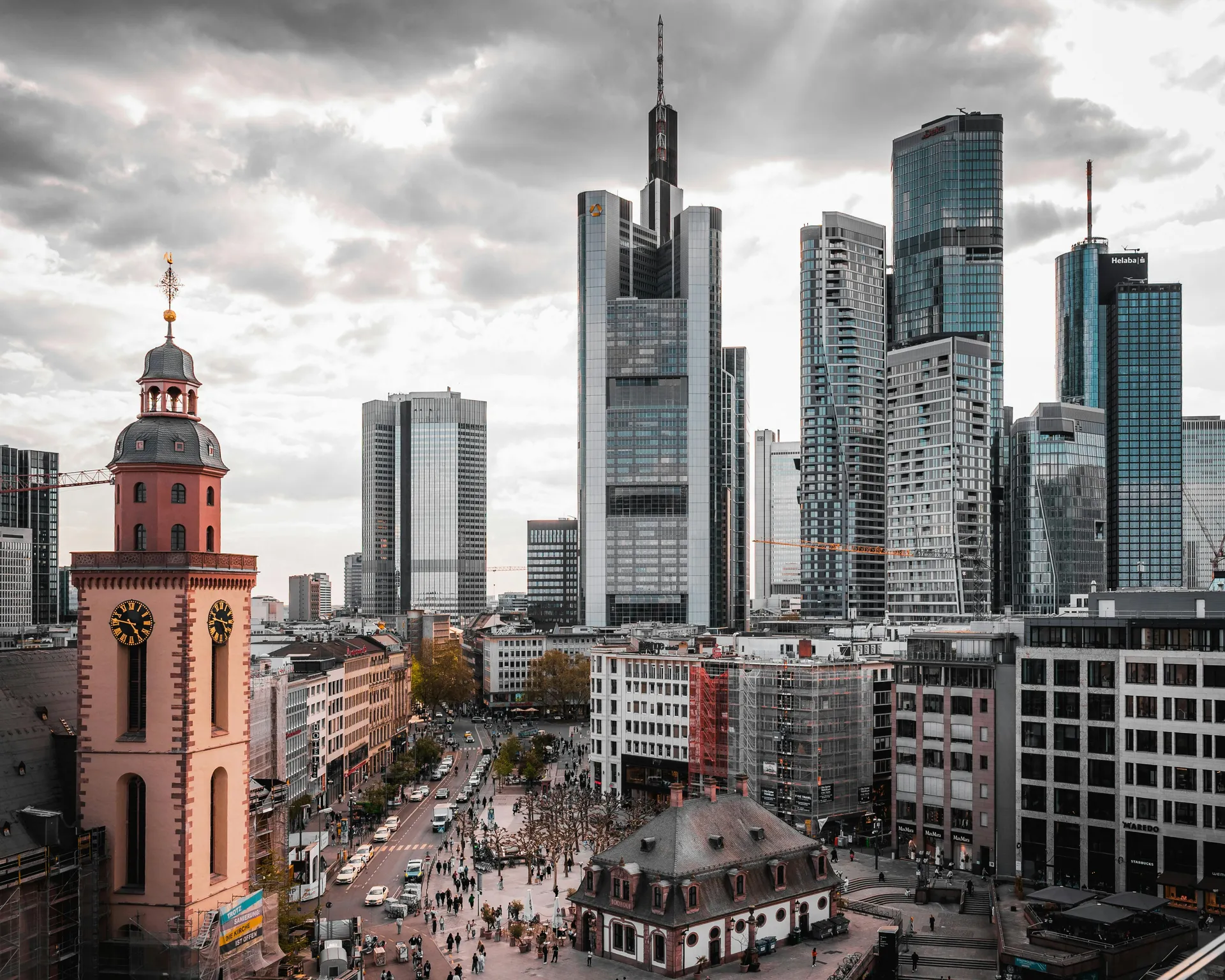
Frankfurt
Germany
City Overview
Frankfurt: Germany’s financial powerhouse and transport hub, blending skyscrapers with historic charm.
Two main ways to access it:
- By air: Frankfurt Airport (FRA) – Europe’s third-busiest, with direct global connections.
- By rail: Frankfurt Hauptbahnhof – Germany’s largest train station, linking high-speed ICE and regional services.
Three main zones/districts:
- Innenstadt (City Center): Core business and shopping area, featuring the Römerberg (historic square), Zeil (shopping street), and Main Tower (skyline views).
- Bahnhofsviertel: Gritty, multicultural district near the train station, known for nightlife, budget stays, and red-light activity.
- Sachsenhausen: Riverside district with apple wine taverns, the Museum Embankment, and a mix of old-world and modern vibes.
Quick Booking
Weather Forecast
21 °C
Practical Information
Emergency Contact Numbers
Police : 110
Fire : 112
Ambulance : 112
Currency & Conversion

0.88 EUR
Electrical Plugs
Voltage : Not available
Plug Type : C,F
Culture & Etiquette
Cultural Summary of Frankfurt
Historical Identity
Frankfurt has long been a crossroads of trade, finance, and culture in Germany.
Its history as a free imperial city (from the 14th century) and later as the coronation site of Holy Roman Emperors shaped its identity.
The city was heavily damaged in World War II but rebuilt, blending modern architecture with restored historic landmarks.
Today, it remains a global hub—home to the European Central Bank and a diverse, international population.
Three Major Cultural Sites & Museums
Römer & Römerberg
- Frankfurt’s historic city hall and surrounding square.
- Features medieval-style buildings and a reconstructed old town (Altstadt).
- A key symbol of the city’s heritage.
Städel Museum
- One of Germany’s most important art museums.
- Houses a vast collection from the Middle Ages to contemporary works.
- Includes masterpieces by Rembrandt, Monet, and Picasso.
Museumsufer (Museum Embankment)
- A cluster of museums along the Main River.
- Highlights:
- Liebieghaus (sculpture collection).
- Museum of Applied Arts (design and crafts).
- German Film Museum (cinema history).
Iconic Local Gastronomy
Frankfurter Würstchen
- Thin, lightly smoked pork sausages.
- Traditionally served with bread, mustard, and horseradish.
Handkäs mit Musik
- Sour milk cheese marinated in vinegar, oil, and onions.
- Often served with rye bread.
Apfelwein (Ebbelwoi)
- Frankfurt’s signature tart cider.
- Served in ribbed glasses (Geripptes) at traditional taverns (Apfelweinkneipen).
Bethmännchen
- Marzipan cookies with almonds.
- A classic Christmas treat, but available year-round.