
 Back
Back 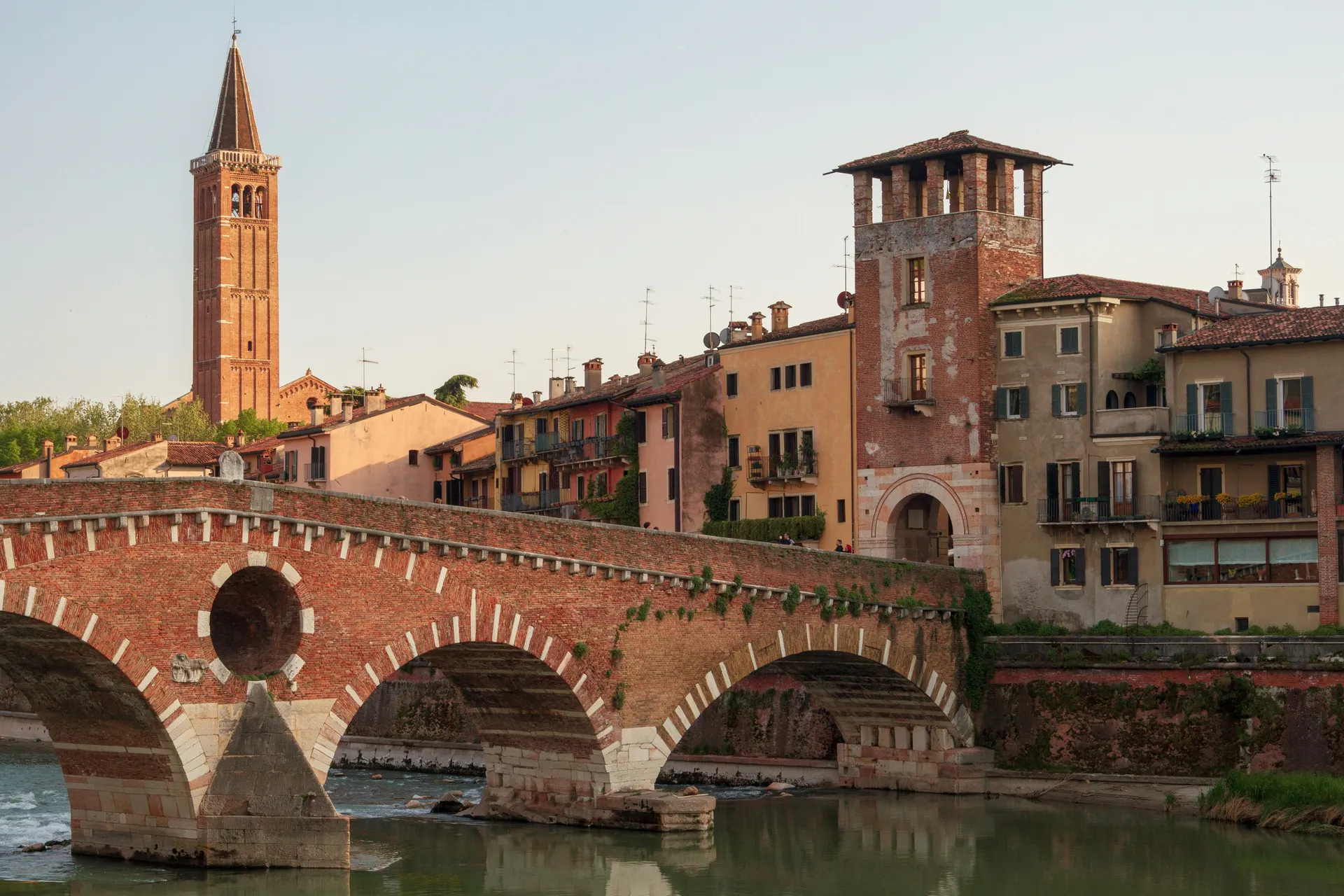
Verona
Italy
City Overview
Verona: Italy’s romantic medieval gem, where Shakespeare’s drama meets timeless Venetian charm.
How to access it:
- By air: Verona Villafranca Airport (VRN), 12 km southwest of the city, with direct flights to major European hubs and budget carriers.
- By train: Verona Porta Nuova, a high-speed rail hub (Frecciarossa/Italo) connecting to Milan (1h 10m), Venice (1h 10m), and Rome (3h).
Three main zones/districts:
- Historic Center (Centro Storico): Core of Verona—home to Piazza delle Erbe, Juliet’s House, Arena di Verona, and Roman ruins (e.g., Porta Borsari).
- San Zeno: West of the center, anchored by the Basilica di San Zeno (Romanesque masterpiece) and quieter residential streets.
- Veronetta: East of the Adige River, a bohemian area with the University of Verona, Castel San Pietro (panoramic views), and offbeat cafés.
Quick Booking
Weather Forecast
28 °C
Practical Information
Emergency Contact Numbers
Police : 112
Fire : 112
Ambulance : 112
Currency & Conversion

0.88 EUR
Electrical Plugs
Voltage : Not available
Plug Type : C,F,L
Culture & Etiquette
Cultural Summary of Verona
Historical Identity
Verona is a city with deep Roman roots, later shaped by medieval and Renaissance influences. It flourished under the Scaliger family in the 13th–14th centuries, becoming a key political and artistic hub. Its well-preserved architecture reflects its layered past, blending Roman, Gothic, and Venetian styles. The city is also famously tied to Shakespeare’s Romeo and Juliet, adding a romantic literary legacy.
Three Major Cultural Sites or Museums
Arena di Verona
- A remarkably intact Roman amphitheater (1st century AD).
- Still hosts world-class opera performances in summer.
- One of the best-preserved ancient structures of its kind.
Juliet’s House (Casa di Giulietta)
- A 14th-century courtyard with a famous balcony.
- Linked to Shakespeare’s Romeo and Juliet, though fictional.
- Features a bronze statue of Juliet and love-themed graffiti.
Castelvecchio Museum
- A medieval fortress turned art museum.
- Houses sculptures, paintings, and weapons from the Middle Ages to the Renaissance.
- Designed by the Scaliger family, showcasing Verona’s military and artistic history.
Iconic Local Gastronomy
Risotto all’Amarone
- Creamy risotto made with Amarone wine, a local Veneto red.
- Often paired with regional cheeses or meats.
Pastissada de Caval
- A slow-cooked horse meat stew, a traditional Veronese dish.
- Typically served with polenta.
Pandoro
- A star-shaped sweet bread, dusted with powdered sugar.
- Originated in Verona and is a staple during Christmas.
Local Wines
- Amarone della Valpolicella – A bold, dry red.
- Soave – A crisp white wine from nearby vineyards.