
 Back
Back 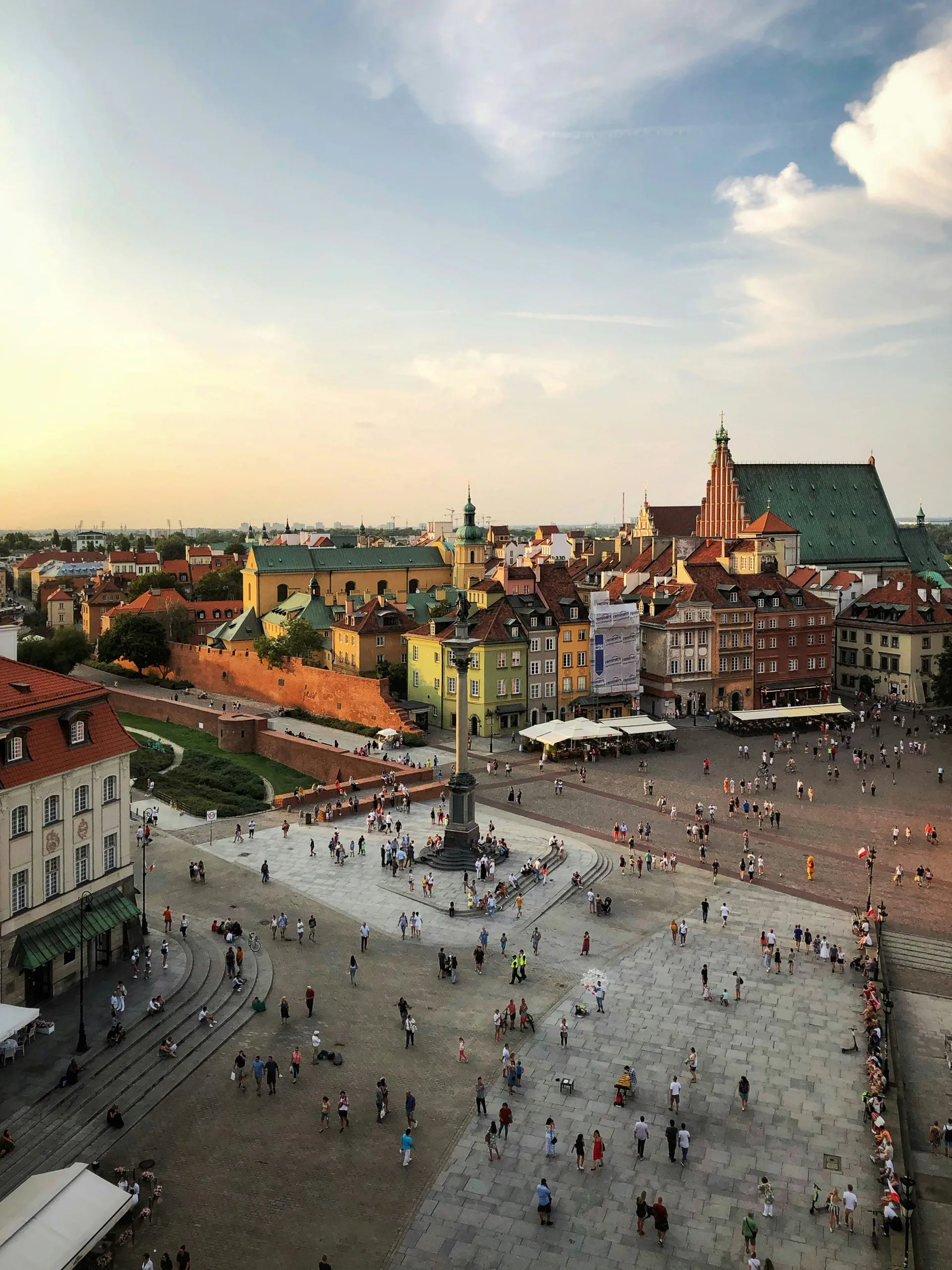
Warsaw
Poland
City Overview
Warsaw: A phoenix city reborn from ashes, blending Soviet scars with modern ambition.
Access:
- By air: Chopin Airport (WAW) – 10 km south of the city center, served by major international and budget airlines.
- By rail: Warszawa Centralna – the main hub for domestic (PKP Intercity) and international trains (e.g., Berlin, Vienna, Moscow).
Main Zones/Districts:
- Śródmieście (City Center) – Core of Warsaw: Old Town (UNESCO-listed reconstruction), financial district, nightlife (Nowy Świat, Krakowskie Przedmieście), and key landmarks (Palace of Culture, Warsaw Uprising Museum).
- Praga (Right Bank) – Gritty, artsy, and authentic: Soviet-era factories turned galleries (Soho Factory), Praga Park, Zoo, and pre-war tenements; less touristy, more local vibe.
- Mokotów & Ochota (Southwest) – Residential and business mix: upscale Mokotów (embassies, parks like Łazienki), student-heavy Ochota (Warsaw University of Technology), and Chopin’s birthplace (Żelazowa Wola nearby).
Quick Booking
Weather Forecast
19 °C
Practical Information
Emergency Contact Numbers
Police : 997 or 112
Fire : 998 or 112
Ambulance : 999 or 112
Currency & Conversion

—
Electrical Plugs
Voltage : Not available
Plug Type : C,E
Culture & Etiquette
Cultural Summary of Warsaw
Historical Identity
Warsaw is Poland’s capital and largest city. It has a turbulent history marked by destruction and resilience.
The city was nearly obliterated during World War II. Over 85% of its buildings were destroyed. Yet, Warsaw rose from the ruins through meticulous reconstruction.
Its Old Town, a UNESCO World Heritage Site, is a symbol of this rebirth. The city blends its tragic past with a vibrant, modern identity.
Three Major Cultural Sites & Museums
Warsaw Uprising Museum
- Dedicated to the 1944 Warsaw Uprising.
- Features interactive exhibits, artifacts, and personal stories.
- A powerful tribute to resistance and sacrifice.
Royal Castle (Zamek Królewski)
- A reconstructed 17th-century royal residence.
- Houses historic art, furnishings, and royal chambers.
- A key landmark in Warsaw’s Old Town.
POLIN Museum of the History of Polish Jews
- Chronicles 1,000 years of Jewish life in Poland.
- Features multimedia exhibits and a striking architecture.
- A moving exploration of culture, survival, and heritage.
Iconic Local Gastronomy
- Pierogi – Dumplings filled with meat, cheese, mushrooms, or fruit.
- Żurek – A sour rye soup with sausage, egg, and potatoes.
- Bigos – A hearty hunter’s stew with sauerkraut, meat, and mushrooms.
- Zapiekanka – A Polish open-faced baguette with toppings, often cheese and mushrooms.
Warsaw’s food reflects its history—hearty, comforting, and deeply traditional.