
 Back
Back 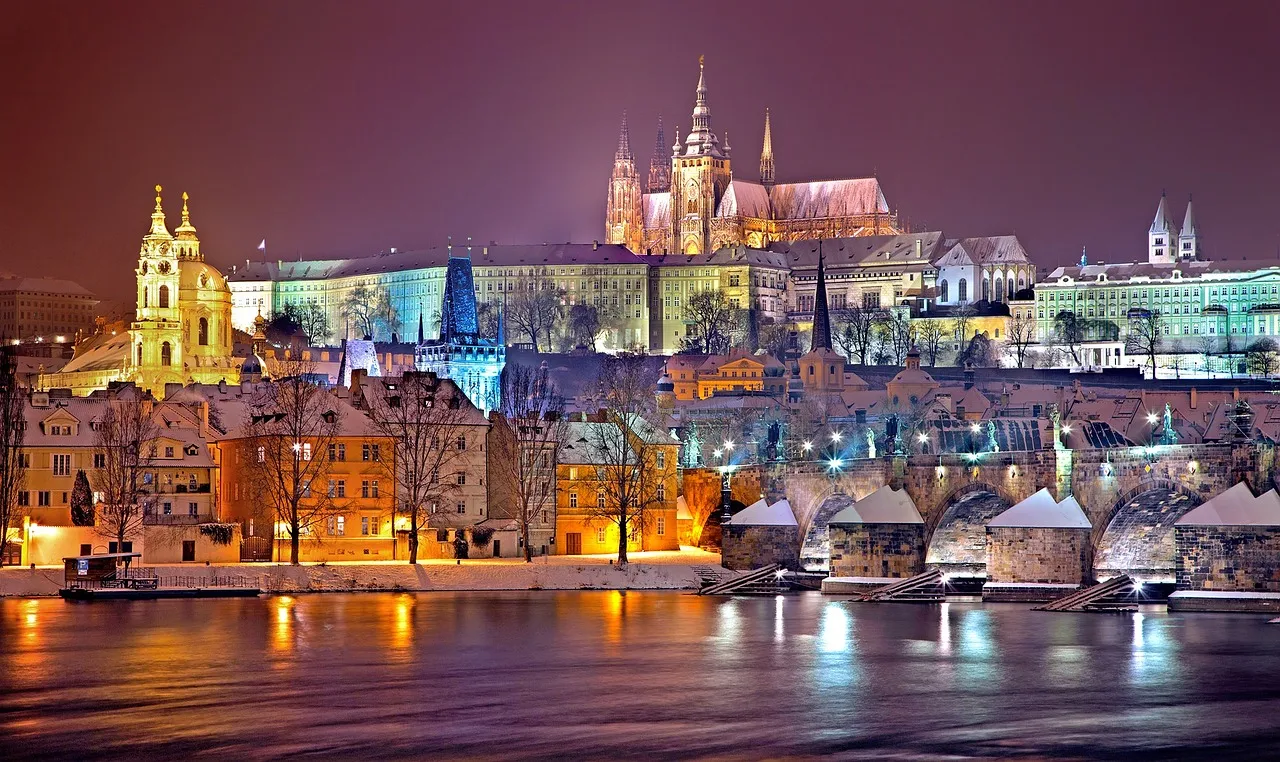
Prague
Czech Republic
City Overview
Prague: A Gothic-Renaissance jewel on the Vltava, where medieval charm collides with vibrant modern life.
Access:
- By air: Václav Havel Airport (PRG), 17 km west of the city center, with direct flights from major European hubs and budget carriers.
- By rail: Main train stations (Praha hlavní nádraží, Holešovice) connect to Berlin, Vienna, Budapest, and domestic routes; buses (Florenc station) serve regional and international destinations.
Three main zones/districts:
- Old Town (Staré Město) & Josefov: Heart of the city—Charles Bridge, Old Town Square (Astronomical Clock), Jewish Quarter, and dense tourist infrastructure (hotels, restaurants, souvenir shops).
- Lesser Town (Malá Strana) & Castle District (Hradčany): Baroque palaces, St. Vitus Cathedral, Prague Castle (largest ancient castle complex), and panoramic views from Petřín Hill.
- New Town (Nové Město) & Vyšehrad: 14th-century grid with Wenceslas Square (commercial hub), modern amenities, and the historic Vyšehrad fortress (quieter, local vibe).
Quick Booking
Weather Forecast
Practical Information
Emergency Contact Numbers
Currency & Conversion

Electrical Plugs
Culture & Etiquette
Cultural Summary of Prague
Historical Identity
Prague is a city of layered history, shaped by empires, revolutions, and artistic movements.
Its medieval core reflects the grandeur of the Holy Roman Empire and the Bohemian Kingdom. The 20th century brought occupation, communist rule, and the Velvet Revolution—events that left visible marks on its streets and psyche.
Today, Prague blends Gothic, Renaissance, Baroque, and Art Nouveau architecture. It remains a hub for literature, music, and avant-garde thought, with a reputation for intellectual and bohemian spirit.
Three Major Cultural Sites or Museums
Prague Castle
- One of the largest ancient castles in the world.
- Houses St. Vitus Cathedral, the Old Royal Palace, and Golden Lane.
- A symbol of Czech statehood and royal history.
Jewish Quarter (Josefov)
- Preserves six synagogues, the Old Jewish Cemetery, and the Jewish Museum.
- Chronicles centuries of Jewish life, persecution, and resilience in Prague.
- Includes the haunting Pinkas Synagogue, a Holocaust memorial.
National Museum
- Located at the top of Wenceslas Square.
- Features exhibits on natural history, art, and Czech culture.
- The historic building itself is an architectural landmark.
Iconic Local Gastronomy
Trdelník
- A sweet pastry cooked over an open flame.
- Rolled in sugar and cinnamon.
- Often filled with ice cream or whipped cream.
Svíčková
- Marinated beef sirloin in a creamy vegetable sauce.
- Served with bread dumplings and cranberry compote.
- A classic Czech dish, often considered the national meal.
Pilsner Urquell
- The original pilsner beer, born in Plzeň (Pilsen) in 1842.
- Widely available in Prague’s pubs and restaurants.
- A cornerstone of Czech drinking culture.