
 Back
Back 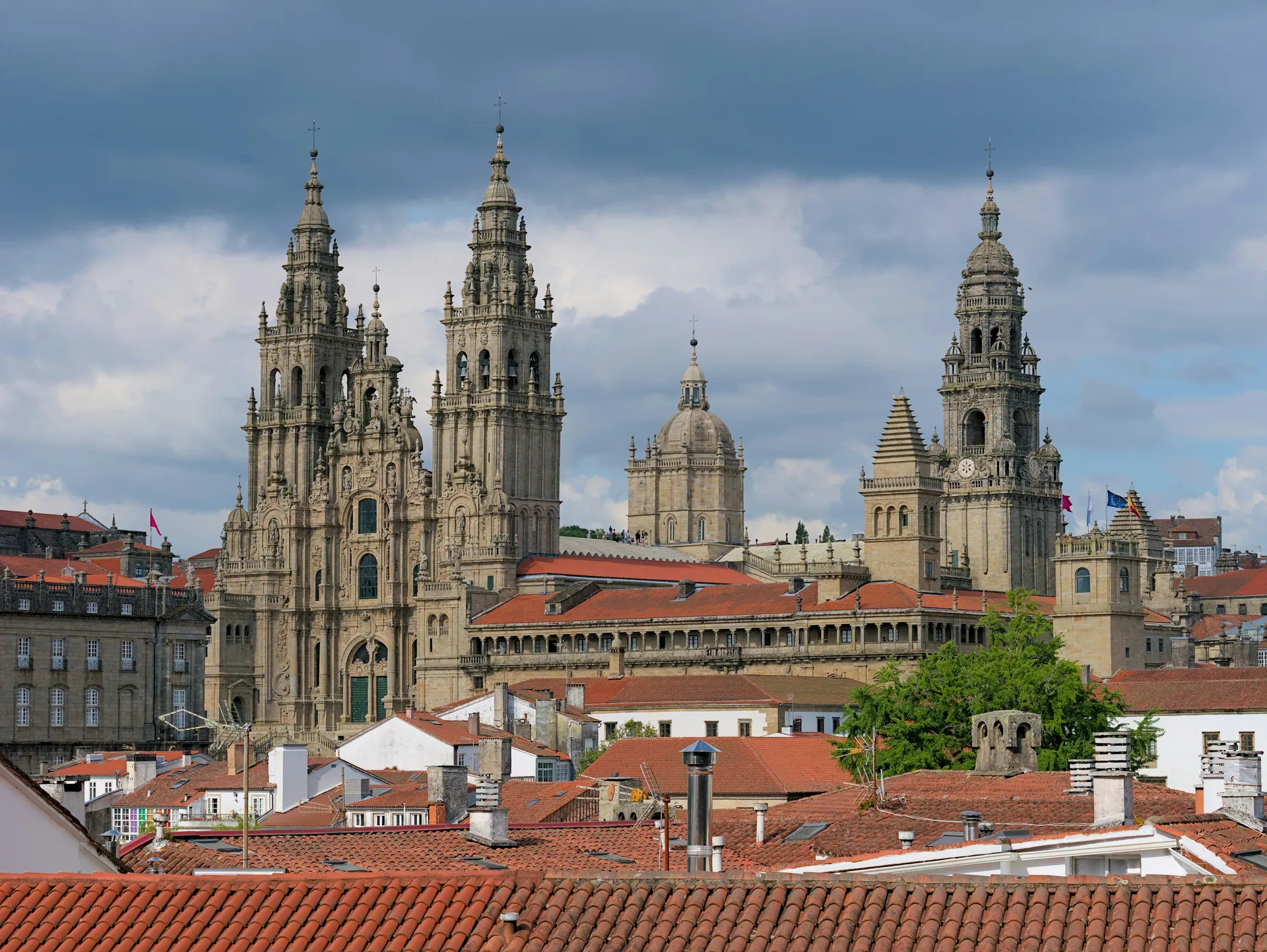
Santiago de Compostela
Spain
City Overview
Santiago de Compostela: The legendary endpoint of the Camino de Santiago, where medieval pilgrimage meets vibrant Galician culture.
Access
- By air: Santiago de Compostela Airport (SCQ), 13 km east of the city, with domestic and limited international flights.
- By train/bus: Direct high-speed trains (Renfe) from Madrid (3h), A Coruña (30 min), and Porto (2h); long-distance buses (ALSA, Monbus) connect to major Spanish cities.
Districts/Zones
- Old Town (Casco Histórico): UNESCO-listed medieval core with the Cathedral, Plaza del Obradoiro, and narrow cobblestone streets.
- Ensanche: Modern commercial hub around Rúa do Franco and Rúa Nova, packed with restaurants, shops, and nightlife.
- San Lázaro: Residential area northeast of the center, home to the University of Santiago de Compostela and quieter parks.
Quick Booking
Weather Forecast
Practical Information
Emergency Contact Numbers
Currency & Conversion

Electrical Plugs
Culture & Etiquette
Cultural Summary of Santiago de Compostela
Historical Identity
Santiago de Compostela is the capital of Galicia, Spain. It is one of Christianity’s most sacred cities.
The city’s identity revolves around the Cathedral of Santiago de Compostela. This cathedral is the final destination of the Camino de Santiago (Way of St. James), a historic pilgrimage route.
For over a thousand years, pilgrims have traveled here to venerate the relics of St. James the Apostle. The city’s medieval streets and architecture reflect its deep religious and cultural heritage.
Three Major Cultural Sites or Museums
Cathedral of Santiago de Compostela
- The spiritual heart of the city.
- Houses the Botafumeiro, a giant incense burner used in ceremonies.
- Features Romanesque, Gothic, and Baroque architecture.
Museo das Peregrinacións (Pilgrimage Museum)
- Dedicated to the history of the Camino de Santiago.
- Displays artifacts, art, and documents related to pilgrimage.
Centro Galego de Arte Contemporánea (CGAC)
- A modern art museum.
- Showcases works by Galician and international contemporary artists.
Iconic Local Gastronomy
Pulpo a la gallega (Galician-style octopus)
- Tender octopus served with paprika, olive oil, and potatoes.
Empanada gallega
- A savory pie filled with meat, fish, or vegetables.
Queixo tetilla (Tetilla cheese)
- A creamy, mild cow’s milk cheese.
Albariño wine
- A crisp white wine from the Rías Baixas region.