
 Back
Back 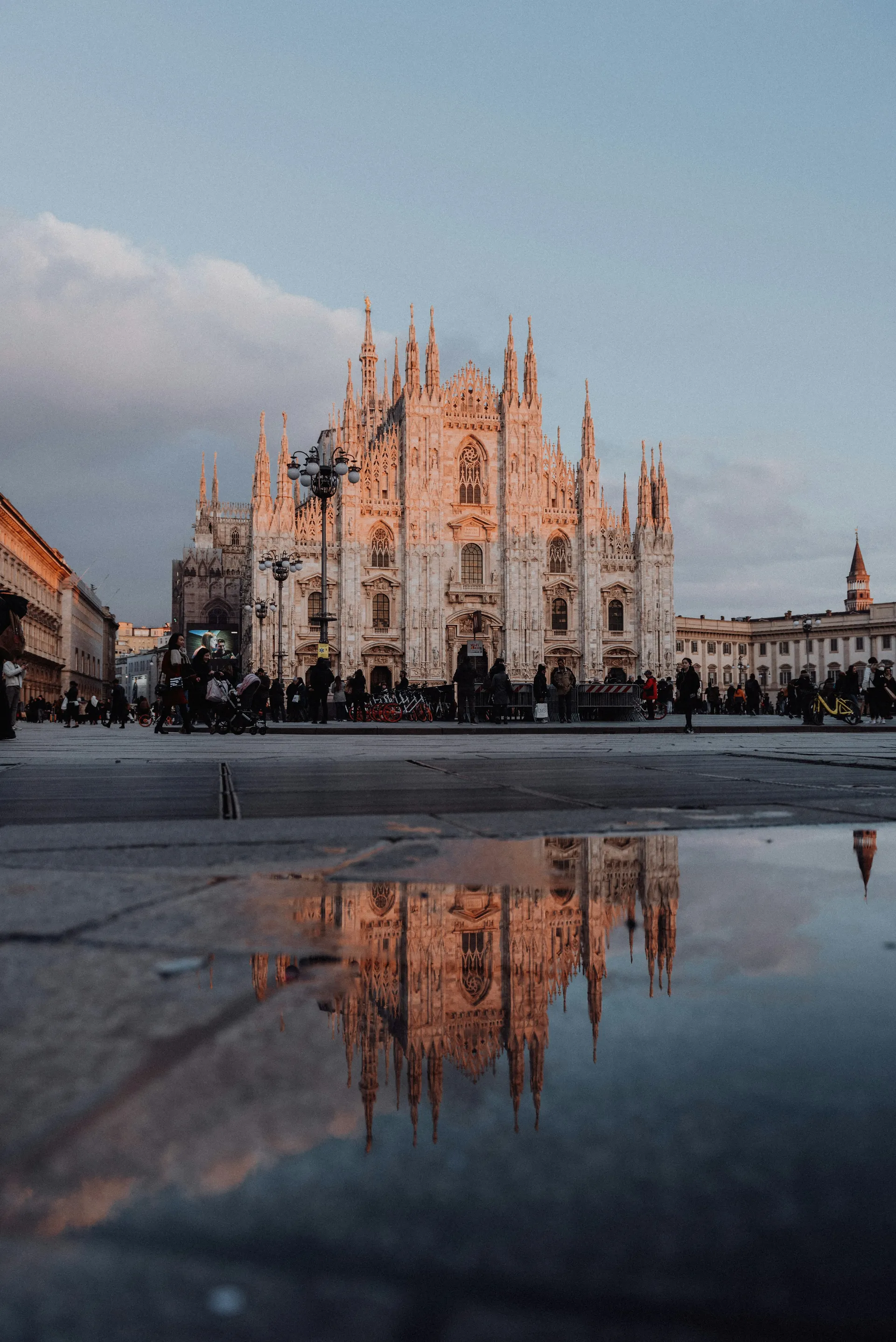
Milan
Italy
City Overview
"Milan: Italy’s sleek powerhouse of fashion, finance, and cutting-edge design, where historic grandeur meets relentless modernity."
Access
- By air: Malpensa Airport (MXP) – primary international hub (45 km northwest); Linate Airport (LIN) – domestic/European flights (7 km east).
- By train: Milano Centrale – high-speed rail nexus (Frecciarossa, Italo, Eurostar) connecting to Rome (3h), Paris (7h), and major European cities.
Districts
- Centro Storico – Core of landmarks: Duomo, Galleria Vittorio Emanuele II, La Scala; dense with luxury shopping and Renaissance architecture.
- Brera – Bohemian-chic quarter; art galleries (Pinacoteca di Brera), upscale dining, and nightlife around Via Brera.
- Navigli – Canal-side district; aperitivo hotspot (Via Naviglio Grande/Pavese), vintage shops, and vibrant nightlife.
Quick Booking
Weather Forecast
Practical Information
Emergency Contact Numbers
Currency & Conversion

Electrical Plugs
Culture & Etiquette
Cultural Summary of Milan
Historical Identity
Milan is Italy’s financial and fashion capital, but its roots run deep into history.
Founded by the Celts in the 6th century BC, it later became a key Roman city (Mediolanum). Under the Visconti and Sforza dynasties (14th–16th centuries), it flourished as a center of art, politics, and trade. The city was a hub of the Renaissance, attracting figures like Leonardo da Vinci. Milan’s identity blends grandeur—seen in its cathedrals and palaces—with a modern, fast-paced urban energy.
Three Major Cultural Sites & Museums
Duomo di Milano (Milan Cathedral)
- A masterpiece of Gothic architecture.
- Took nearly six centuries to complete (1386–1965).
- Features intricate marble façades, spires, and a rooftop with panoramic views.
- Houses the Madonnina, the city’s iconic golden statue.
Santa Maria delle Grazie & The Last Supper
- A UNESCO-listed Dominican convent.
- Home to Leonardo da Vinci’s The Last Supper (Il Cenacolo), painted 1495–1498.
- Reservations are required to view the fragile fresco.
Pinacoteca di Brera
- Milan’s premier art gallery.
- Displays works by Italian masters like Caravaggio, Raphael, and Mantegna.
- Located in the historic Brera district, a cultural hub with cafés and bookshops.
Iconic Local Gastronomy
Risotto alla Milanese
- Saffron-infused risotto, creamy and golden.
- Often served with ossobuco (braised veal shank).
Cotoletta alla Milanese
- Breaded, pan-fried veal cutlet (bone-in).
- Similar to Wiener Schnitzel but with Milanese origins.
Panettone
- A sweet, fluffy Christmas cake with candied fruit.
- Originated in Milan but now a national holiday staple.
Aperitivo Culture
- Evening ritual: order a drink (e.g., Negroni, Spritz) and enjoy free small plates.
- Popular in bars around Navigli and Corso Como.