
 Back
Back 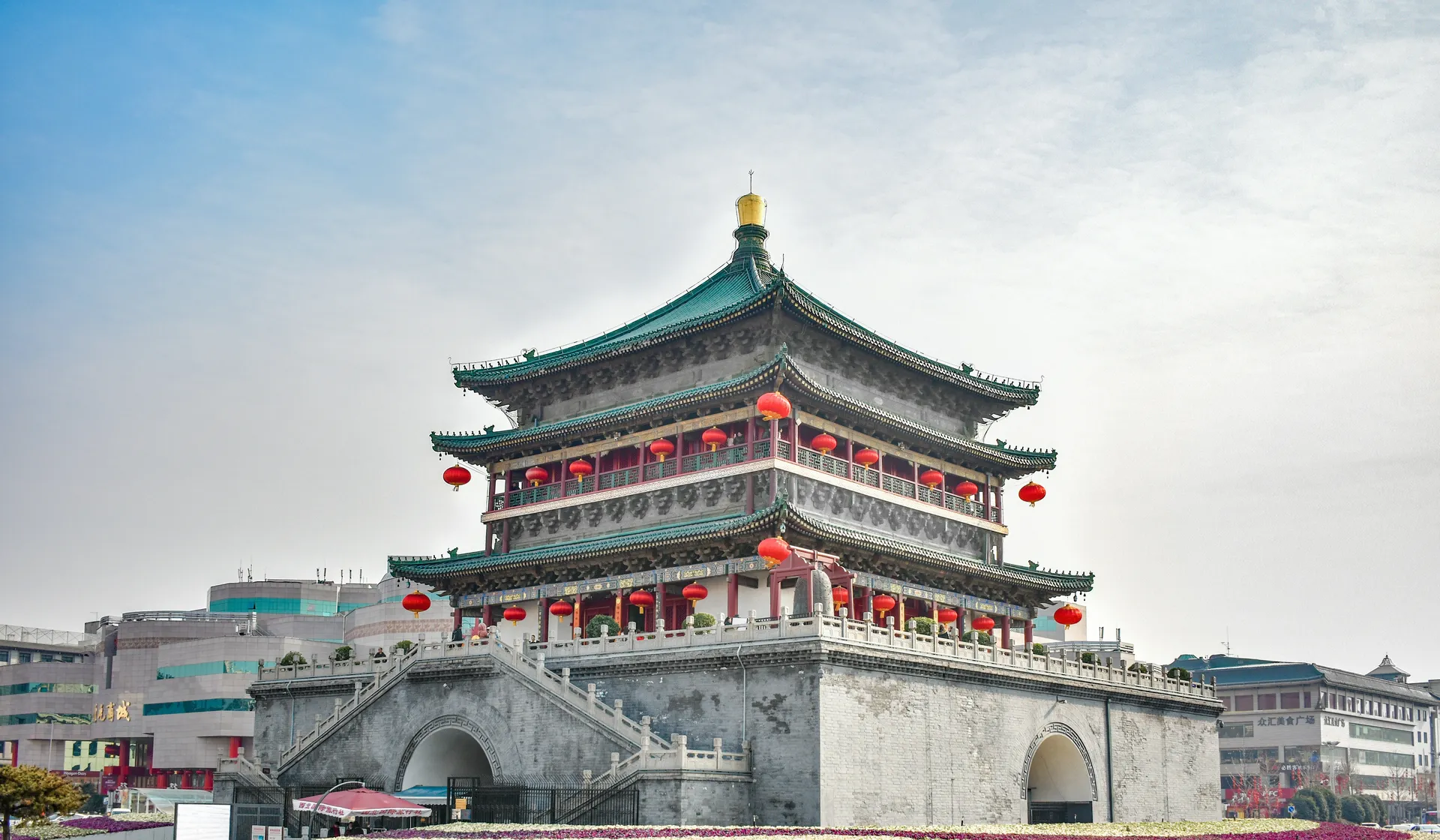
Xi'an
China
City Overview
Xi’an: China’s ancient imperial capital, where 3,000 years of history collide with modern energy.
Access
- By air: Xi’an Xianyang International Airport (XIY) – 40 km northwest of the city, with domestic and international flights (e.g., Beijing, Shanghai, Seoul, Tokyo).
- By train: Xi’an Railway Station (north of the city wall) and Xi’an North Railway Station (high-speed trains, e.g., to Beijing in 4.5 hours, Shanghai in 6 hours).
Key Districts
- City Center (Within the City Wall) – Core of historic Xi’an: Bell Tower, Muslim Quarter, Drum Tower, and the Tang Dynasty-era street grid.
- South City (South of the Wall) – Modern commercial hub: Big Wild Goose Pagoda, Shaanxi History Museum, and Tang Paradise Park.
- North City (North of the Wall) – Administrative and transport nexus: Xi’an Railway Station, Weiyang Palace ruins, and industrial areas.
Quick Booking
Weather Forecast
31 °C
Practical Information
Emergency Contact Numbers
Police : 110
Fire : 119
Ambulance : 120
Currency & Conversion

—
Electrical Plugs
Voltage : Not available
Plug Type : A,I
Culture & Etiquette
Cultural Summary of Xi’an
Historical Identity
Xi’an is one of China’s oldest cities, with over 3,100 years of history. It served as the capital for 13 dynasties, including the Zhou, Qin, Han, and Tang. Known as Chang’an in ancient times, it was the eastern terminus of the Silk Road, blending Chinese, Central Asian, and Middle Eastern influences. The city remains a symbol of China’s imperial past and cultural heritage.
Three Major Cultural Sites or Museums
Terracotta Army (兵马俑)
- A UNESCO World Heritage Site.
- Features thousands of life-sized clay soldiers buried with China’s first emperor, Qin Shi Huang.
- Discovered in 1974, it is one of the most significant archaeological finds of the 20th century.
Xi’an City Wall (西安城墙)
- One of the oldest, largest, and best-preserved city walls in China.
- Built during the Ming Dynasty (1370–1378) on Tang Dynasty foundations.
- Offers bike rentals for visitors to ride along the 14 km perimeter.
Shaanxi History Museum (陕西历史博物馆)
- Houses over 370,000 relics, spanning 1 million years of Shaanxi’s history.
- Features Tang Dynasty murals, gold and silver artifacts, and ancient pottery.
- Free admission (with passport or ID).
Iconic Local Gastronomy
- Roujiamo (肉夹馍) – Often called the "Chinese hamburger", it consists of shredded braised pork stuffed in a crusty flatbread.
- Yangrou Paomo (羊肉泡馍) – A lamb stew served with crumbled flatbread to soak up the broth.
- Biangbiang Noodles (油泼扯面) – Wide, hand-pulled noodles topped with chili oil, vegetables, and meat.
- Persimmon Cake (柿子饼) – A sweet, chewy pastry made from dried persimmons, often dusted with flour.
Xi’an’s food reflects its historical role as a Silk Road hub, blending spices, wheat-based dishes, and hearty flavors.