
 Back
Back 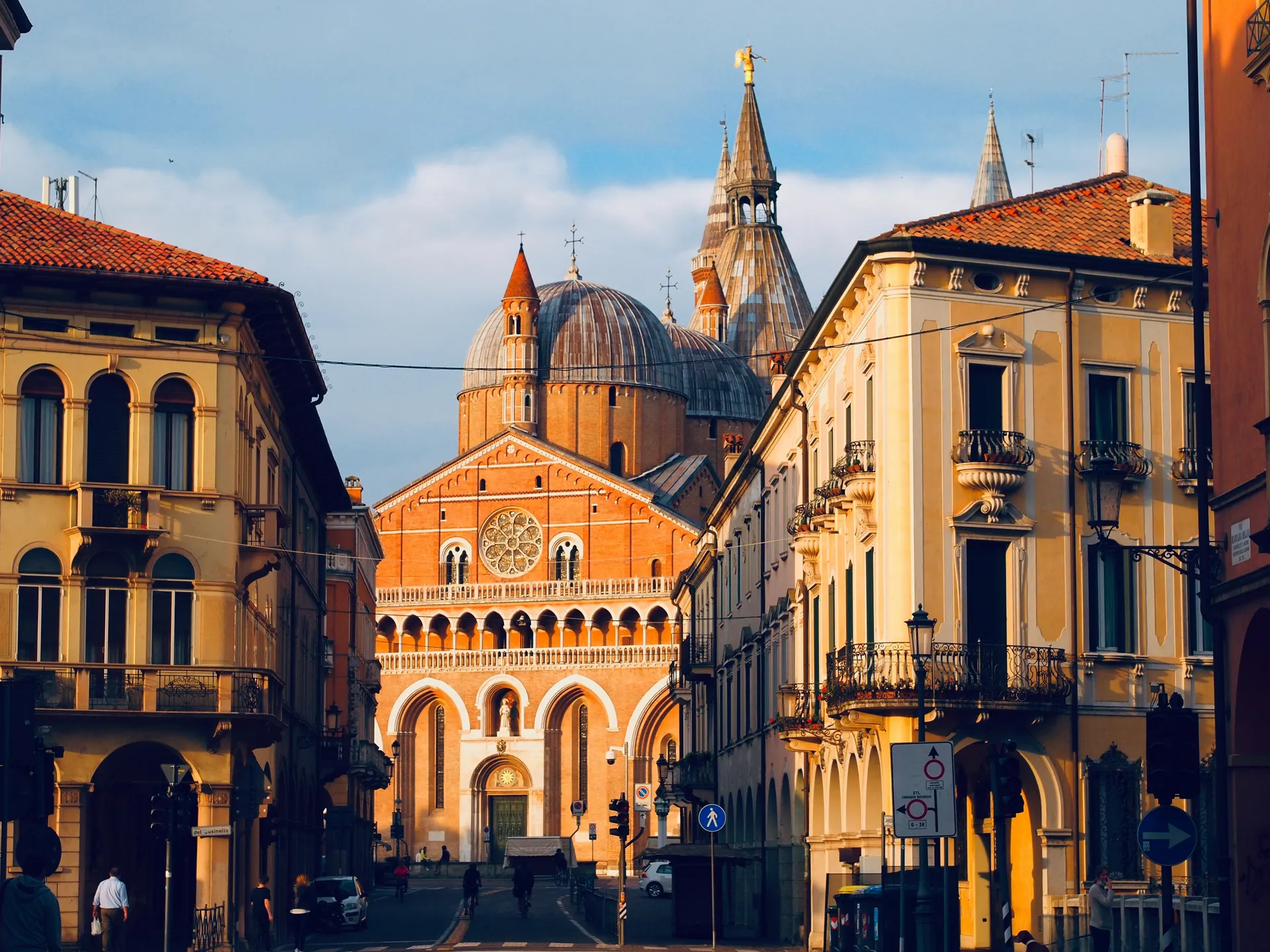
Padua
Italy
City Overview
Padua: A historic university city blending medieval charm with vibrant intellectual energy.
How to access it:
- By air: Fly into Venice Marco Polo Airport (VCE) or Treviso Airport (TSF), then take a bus, train, or shuttle (~30–60 min to Padua).
- By train: Direct high-speed (Frecciarossa/Italo) and regional trains from major Italian cities (Venice: 25–40 min; Milan: ~2h; Rome: ~3.5h).
Three main zones/districts:
- Historic Center (Centro Storico): Core of Padua, packed with landmarks (Basilica di Sant’Antonio, Palazzo della Ragione, Prato della Valle), medieval streets, and the University of Padua.
- Arcella: Northern district, home to the Basilica of Sant’Antonio’s pilgrimage sites (e.g., Santuario dell’Arcella) and quieter residential areas.
- Stanga/San Lazzaro: Southeastern zone with the train station (Padova Centrale), modern shopping (e.g., Centro Commerciale La Stanga), and industrial outskirts.
Quick Booking
Weather Forecast
Practical Information
Emergency Contact Numbers
Currency & Conversion

Electrical Plugs
Culture & Etiquette
Cultural Summary of Padua (Padova), Italy
Historical Identity
Padua is one of Italy’s oldest cities, with roots tracing back to pre-Roman times.
It flourished under the Roman Republic as Patavium, becoming a center of trade and learning. In the Middle Ages, it was a free commune and a hub of intellectual life, home to the University of Padua (founded 1222)—one of Europe’s oldest. The city was a key Renaissance cultural capital, attracting artists, scientists, and thinkers like Galileo Galilei and Donatello. Its historic center reflects layers of medieval, Gothic, and Venetian influence, shaped by centuries of political and artistic evolution.
Three Major Cultural Sites & Museums
Scrovegni Chapel (Cappella degli Scrovegni)
- A masterpiece of Giotto’s frescoes (1303–1305).
- Depicts the Life of Christ and the Last Judgment in vibrant, revolutionary detail.
- Considered a turning point in Western art.
Basilica of Saint Anthony (Basilica di Sant’Antonio)
- A major pilgrimage site dedicated to St. Anthony of Padua.
- Blends Romanesque, Gothic, and Byzantine styles.
- Houses relics of the saint, including his tongue and jawbone.
- Features works by Donatello, including the equestrian statue of Gattamelata outside.
Palazzo della Ragione & Civic Museums
- A medieval palace with a vast Great Hall (Salone) adorned with astrological frescoes.
- The Musei Civici agli Eremitani (Civic Museums) include:
- Archaeological collections (Roman and pre-Roman artifacts).
- Medieval and Renaissance art, including works by Bellini and Tintoretto.
Iconic Local Gastronomy
Bigoli in salsa
- Thick, whole-wheat pasta (bigoli) served with a sauce of slow-cooked onions and salted fish (usually anchovies).
- A traditional Venetian-Paduan dish, often eaten on Ash Wednesday.
Risotto al radicchio
- Creamy risotto made with radicchio di Treviso (a bitter red chicory).
- Sometimes paired with sausage or cheese.
Paduan sweets
- Torta Pazientina – A layered almond and sponge cake, named after the Patience of Job.
- Zaletti – Cornmeal cookies with raisins and lemon zest.
- Fritelle – Sweet fried dough balls, often flavored with grappa or raisins, popular during Carnival.
Wines
- Bianco di Custoza (white) and Merlot (red) from nearby Colli Euganei hills.
- Spritz (Aperol or Campari-based cocktail) is a common Venetian-style aperitivo.