
 Back
Back 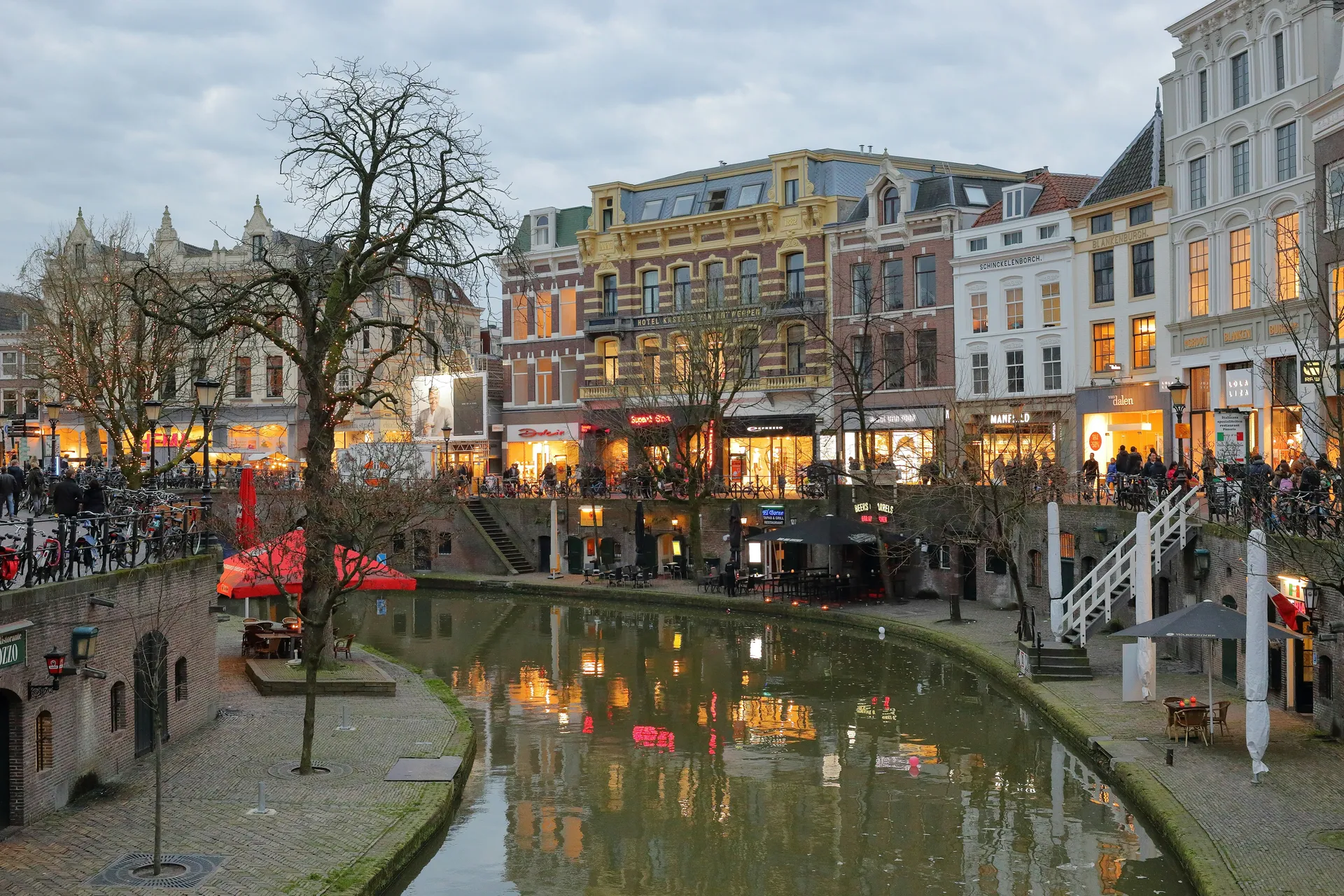
Utrecht
Netherlands
City Overview
"Utrecht: A compact, historic Dutch hub blending medieval charm with vibrant urban energy."
Access:
- By air: Amsterdam Schiphol Airport (30–45 min by train to Utrecht Centraal).
- By train: Utrecht Centraal is the Netherlands’ busiest rail hub, with direct links to major Dutch/European cities (e.g., Amsterdam: 25 min, Rotterdam: 40 min, Brussels: 2h).
Main Zones/Districts:
- City Center (Binnenstad): Core of canals, Dom Tower, historic wharves, and dense cultural/retail activity.
- Lombok: Multicultural district with Middle Eastern/Eastern European shops, budget eats, and the bustling Kanaalstraat market.
- De Uithof: Modern campus area (Utrecht University) with futuristic architecture, student life, and the Rietveld Schröder House.
Quick Booking
Weather Forecast
Practical Information
Emergency Contact Numbers
Currency & Conversion

Electrical Plugs
Culture & Etiquette
Cultural Summary of Utrecht
Historical Identity
Utrecht is one of the Netherlands’ oldest cities, founded by the Romans in 47 AD as a frontier fort.
It later became a religious and political center in the Middle Ages, serving as the seat of the Archbishop of Utrecht—a key figure in Dutch Christianity.
The city thrived as a trade hub due to its strategic location along the Rhine River and its role in the Hanseatic League.
Utrecht’s canals, wharves, and medieval architecture reflect its rich history, blending Gothic, Romanesque, and modern influences.
Three Major Cultural Sites & Museums
Dom Tower & Cathedral (Domkerk)
- The tallest church tower in the Netherlands (112m).
- Symbol of Utrecht, offering panoramic city views.
- The cathedral’s nave collapsed in 1674, leaving the tower separated from the church.
Centraal Museum
- Utrecht’s oldest municipal museum (founded in 1838).
- Houses Dutch art from the Middle Ages to modern day, including works by Gerrit Rietveld and the Utrecht Caravaggisti.
- Features the Rietveld Schröder House (a UNESCO-listed De Stijl masterpiece).
Museum Catharijneconvent
- A museum of religious art and history in a former monastery.
- Displays medieval manuscripts, altarpieces, and relics from Dutch Christianity.
- Explores the cultural impact of religion in the Netherlands.
Iconic Local Gastronomy
- Utrechts sprits – A buttery, crumbly shortbread cookie, often shaped like a windmill or letter.
- Utrechtse spritsen met hagelslag – The same cookie topped with chocolate sprinkles (hagelslag).
- Oliebollen – Deep-fried dough balls (traditionally eaten on New Year’s Eve).
- Stroopwafels – Though not unique to Utrecht, they are a beloved Dutch treat found in local markets.
(Note: The page does not mention specific restaurants or modern food trends—only traditional treats.)