
 Back
Back 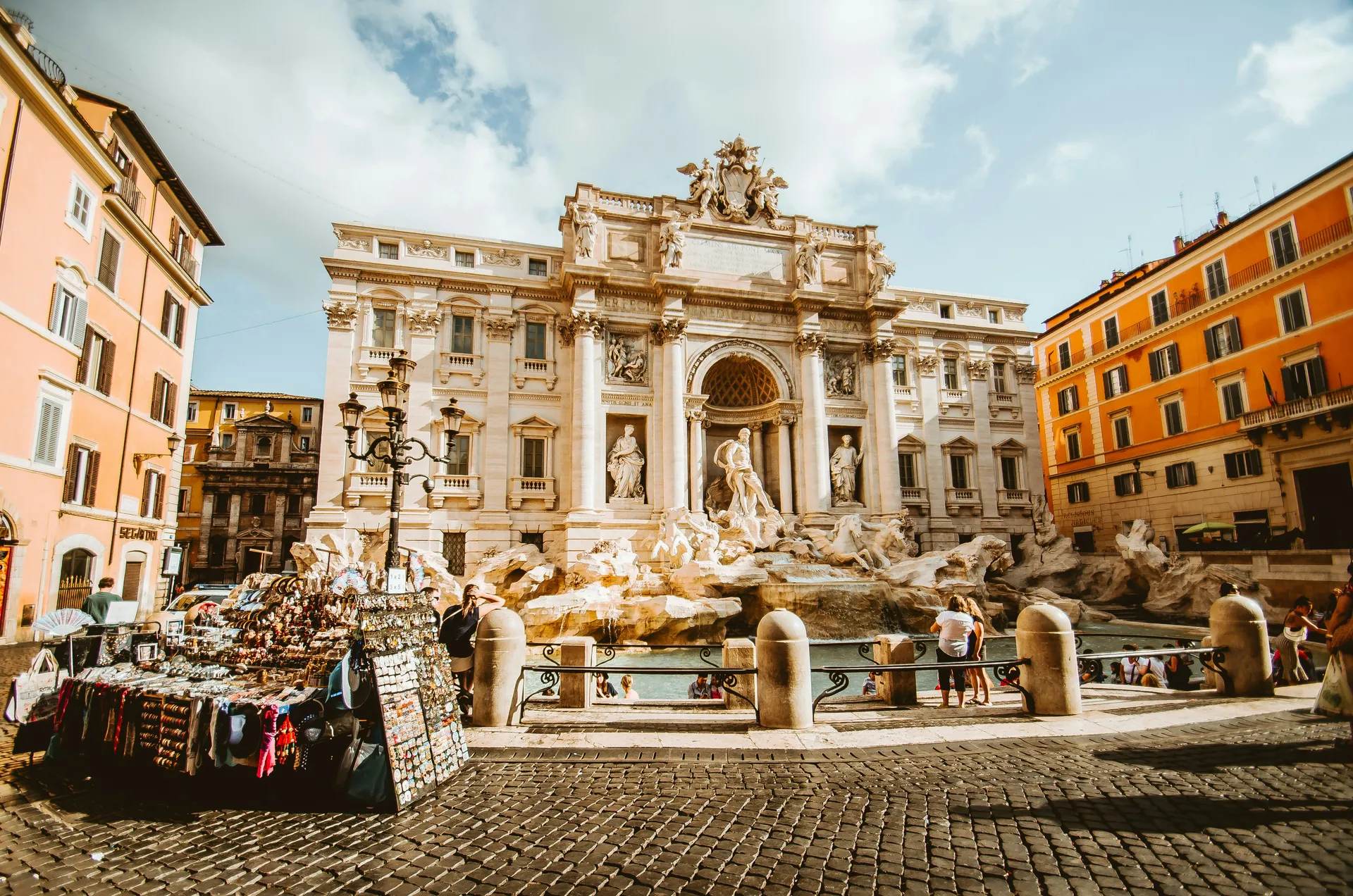
Rome
Italy
City Overview
"Rome: The Eternal City where ancient history, Baroque grandeur, and modern chaos collide in every cobblestone."
Access
- By air: Two major airports—Fiumicino (FCO) (primary international hub, 30 km southwest) and Ciampino (CIA) (budget airlines, 15 km southeast).
- By train: Roma Termini, the central station, connects to Italy’s high-speed rail (Frecciarossa, Italo) and regional networks.
Districts
- Historic Center (Centro Storico): Core of Rome—home to the Pantheon, Piazza Navona, Trevi Fountain, Campo de’ Fiori, and Piazza Venezia. Dense with landmarks, restaurants, and tourist crowds.
- Vatican & Prati: Vatican City (St. Peter’s Basilica, Sistine Chapel) and the adjacent Prati district (upscale shopping, quieter streets).
- Trastevere: Bohemian riverside quarter with narrow alleys, nightlife, and authentic trattorias—less polished, more local vibe.
Quick Booking
Weather Forecast
Practical Information
Emergency Contact Numbers
Currency & Conversion

Electrical Plugs
Culture & Etiquette
Cultural Summary of Rome
Historical Identity
Rome is the eternal city, a living museum of Western civilization.
Its history spans over 2,800 years, from its mythical founding in 753 BC to its role as the heart of the Roman Empire, the center of Catholicism, and the capital of modern Italy.
Layers of ancient, medieval, Renaissance, and Baroque influences shape its identity. Ruins, churches, and grand piazzas tell stories of emperors, popes, artists, and revolutionaries.
Today, Rome balances timeless tradition with vibrant contemporary life.
Three Major Cultural Sites & Museums
The Colosseum
- Icon of ancient Rome.
- Built in 70–80 AD under Emperor Vespasian.
- Hosted gladiator battles, public spectacles, and mock naval fights.
- Symbol of imperial power and engineering prowess.
Vatican City (St. Peter’s Basilica & the Vatican Museums)
- Spiritual and artistic epicenter of Catholicism.
- St. Peter’s Basilica: Largest church in the world, designed by Michelangelo, Bernini, and Bramante.
- Vatican Museums: House the Sistine Chapel, featuring Michelangelo’s frescoes (Creation of Adam, Last Judgment).
- A treasure trove of Renaissance and Baroque masterpieces.
Borghese Gallery (Galleria Borghese)
- Showcases one of Rome’s finest private art collections.
- Works by Bernini, Caravaggio, Raphael, and Titian.
- Housed in a 17th-century villa surrounded by Villa Borghese gardens.
- Focuses on sculpture and painting from the 16th–18th centuries.
Iconic Local Gastronomy
Cacio e Pepe
- Simple yet legendary pasta.
- Made with pecorino cheese, black pepper, and pasta water.
- A test of a chef’s skill—creamy, not greasy.
Supplì
- Rome’s answer to fried rice balls.
- Crispy outside, mozzarella-filled inside.
- Often served as street food or antipasto.
Carciofi alla Romana (Roman-Style Artichokes)
- Tender artichokes braised with garlic, mint, and olive oil.
- A springtime specialty.
- Served whole, petals pulled apart and eaten by hand.
Abbacchio alla Scottadito (Grilled Lamb Chops)
- Traditional Easter dish.
- Lamb chops grilled with rosemary and garlic.
- Name means "burnt fingers"—best eaten hot.
Maritozzo con la Panna
- Sweet cream-filled bun.
- Soft, slightly sweet bread stuffed with whipped cream.
- A breakfast or snack staple.
Gelato
- Rome’s gelaterias are world-class.
- Look for artisanal shops (avoid bright, artificial colors).
- Classic flavors: pistachio, stracciatella, ricotta-fig.