
 Back
Back 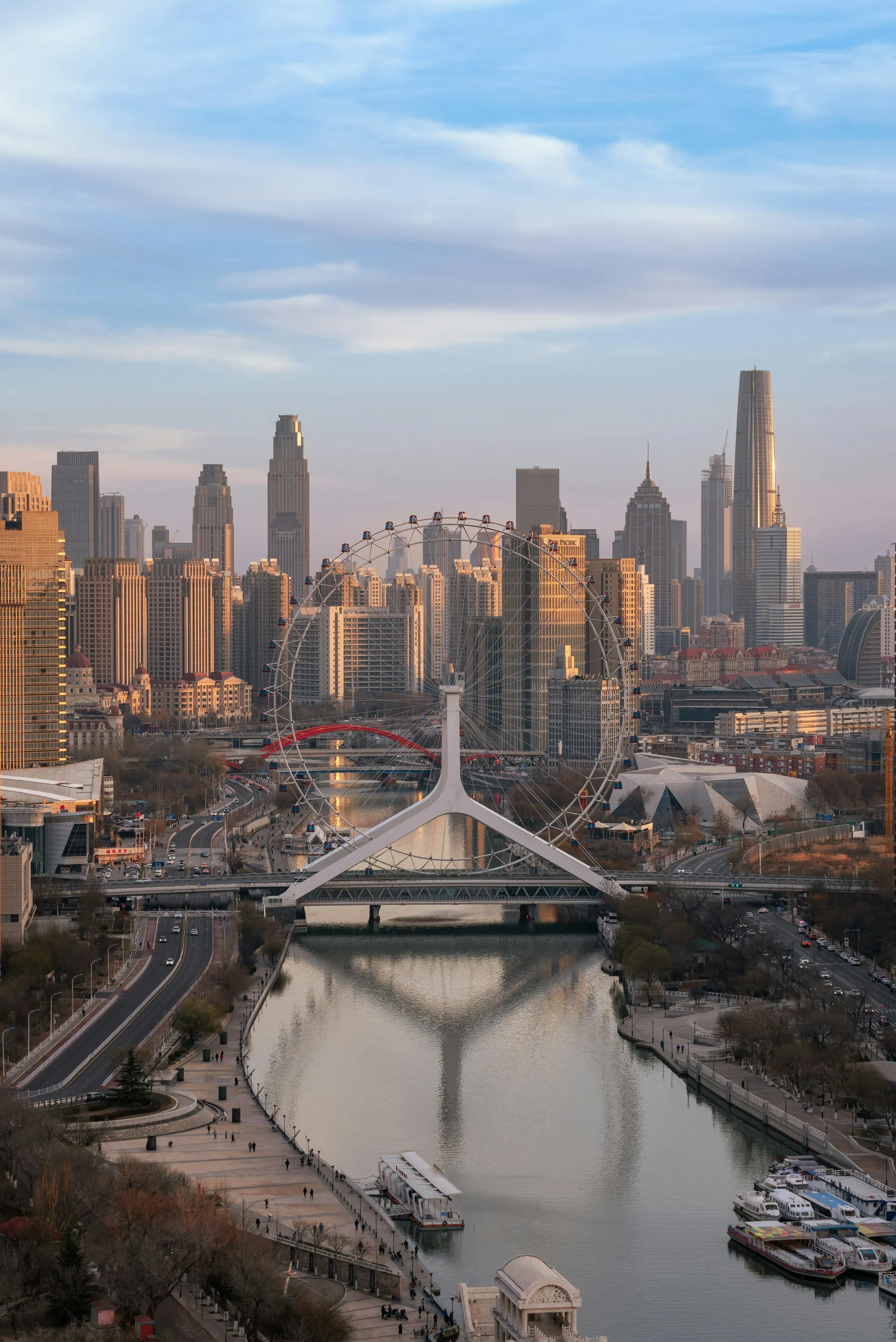
Tianjin
China
City Overview
Tianjin: China’s historic port city where colonial grandeur meets modern industry and vibrant street life.
How to access it:
- By air – Tianjin Binhai International Airport (TSN), 15 km east of downtown, with domestic and limited international flights.
- By high-speed rail – Direct links from Beijing (30 min via Beijing–Tianjin Intercity Railway) and other major Chinese cities via Tianjin Railway Station or Tianjin West Railway Station.
Three main zones/districts:
- Heping District – Downtown core with colonial architecture (Five Great Avenues), shopping (Binjiang Dao), and nightlife (Ancient Culture Street).
- Hedong District – Business and transport hub (Tianjin Railway Station), with the Hai River waterfront and industrial areas.
- Binhai New Area – Coastal economic zone featuring the Tianjin Economic-Technological Development Area (TEDA), Binhai International Airport, and modern attractions (e.g., Tianjin Eye, Porcelain House).
Quick Booking
Weather Forecast
Practical Information
Emergency Contact Numbers
Currency & Conversion

Electrical Plugs
Culture & Etiquette
Cultural Summary of Tianjin
Historical Identity
Tianjin is one of China’s oldest port cities, with a history spanning over 600 years. It flourished as a trading hub during the Ming and Qing dynasties, blending Chinese traditions with foreign influences due to its strategic location. The city’s colonial past—under British, French, German, and other foreign concessions—left a unique architectural and cultural imprint. Today, Tianjin retains a mix of modern development and historical charm, reflecting its role as a gateway between northern China and the world.
Three Major Cultural Sites or Museums
Ancient Culture Street (古文化街)
- A reconstructed Qing-dynasty-style street.
- Features traditional Chinese architecture, folk art, and local crafts.
- Home to the Tianhou Palace, a temple dedicated to the sea goddess Mazu.
Tianjin Museum (天津博物馆)
- Houses over 200,000 artifacts, including calligraphy, paintings, and historical relics.
- Showcases Tianjin’s history, from ancient times to its colonial era.
Five Great Avenues (五大道)
- A historic district with European-style villas from the early 20th century.
- Reflects the city’s colonial past with British, French, Italian, and German architectural influences.
Iconic Local Gastronomy
Goubuli Baozi (狗不理包子)
- Tianjin’s most famous snack: steamed buns filled with pork and gelatinized broth.
- Named after a legendary vendor, "Goubuli" ("dogs ignore"), for their irresistible taste.
Jianbing Guozi (煎饼馃子)
- A popular street breakfast: crispy crepe with egg, scallions, and fried dough sticks.
Tianjin Mahua (天津麻花)
- Twisted, deep-fried dough sticks, often sweet or savory.
- A traditional snack with a history of over 100 years.