
 Back
Back 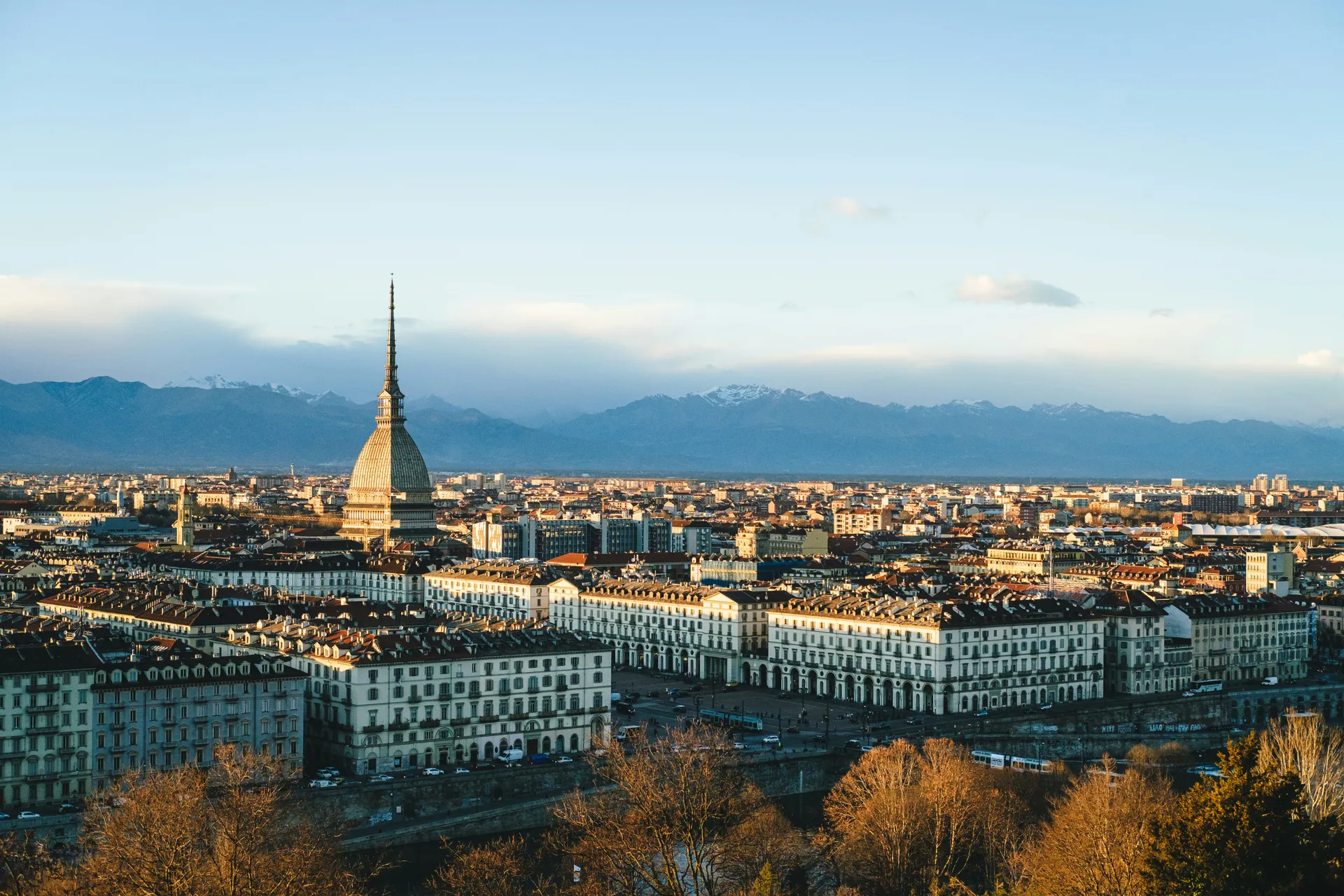
Turin
Italy
City Overview
Turin: Italy’s understated powerhouse of baroque grandeur, industrial grit, and alpine-backed sophistication.
Access:
- By air – Sandro Pertini International Airport (TRN) (16 km northwest), linked by bus (Sadem, 40 min) or taxi (25 min) to the city center.
- By train – Torino Porta Nuova (main hub) and Torino Porta Susa (high-speed connections), both central and well-connected to Milan (1h), Paris (5.5h), and Rome (4h).
Districts:
- Centro Storico (Historic Center) – Baroque palaces (Palazzo Reale, Palazzo Madama), arcaded streets (Via Roma, Via Po), and the Duomo (home to the Shroud of Turin).
- Quadrilatero Romano – Medieval grid north of Piazza Castello, packed with aperitivo bars, vintage shops, and nightlife (Via Sant’Agostino, Via della Consolata).
- Crocetta/San Salvario – Former industrial zones reborn as hipster hubs: San Salvario (student bars, multicultural eats) and Crocetta (residential, near Lingotto ex-Fiat factory).
Quick Booking
Weather Forecast
28 °C
Practical Information
Emergency Contact Numbers
Police : 112
Fire : 112
Ambulance : 112
Currency & Conversion

0.88 EUR
Electrical Plugs
Voltage : Not available
Plug Type : C,F,L
Culture & Etiquette
Cultural Summary of Turin
Historical Identity
Turin is a city with deep royal and industrial roots.
It was the first capital of unified Italy (1861–1865) and the heart of the Savoy dynasty, which shaped its grand architecture and aristocratic heritage.
Later, it became a powerhouse of Italy’s automotive industry, home to Fiat and a center of innovation.
The city blends Baroque elegance with a working-class spirit, reflected in its museums, cafés, and historic neighborhoods.
Three Major Cultural Sites or Museums
Palazzo Reale (Royal Palace of Turin)
- Former residence of the Savoy kings.
- Houses opulent rooms, royal armories, and the Sabauda Gallery with Renaissance art.
Museo Egizio (Egyptian Museum)
- One of the world’s most important Egyptian collections outside Cairo.
- Features mummies, sarcophagi, and the Temple of Ellesiya.
Museo Nazionale del Cinema (National Cinema Museum)
- Located in the Mole Antonelliana, a symbol of the city.
- Showcases film history, interactive exhibits, and a panoramic elevator.
Iconic Local Gastronomy
- Gianduja chocolate – A creamy hazelnut chocolate, invented in Turin.
- Aperitivo culture – A pre-dinner ritual with drinks and small bites (e.g., bagna càuda, a warm anchovy-garlic dip).
- Agnolotti – Piedmontese stuffed pasta, often served with butter and sage.
- Bicerin – A historic layered drink of coffee, chocolate, and cream.