
 Back
Back 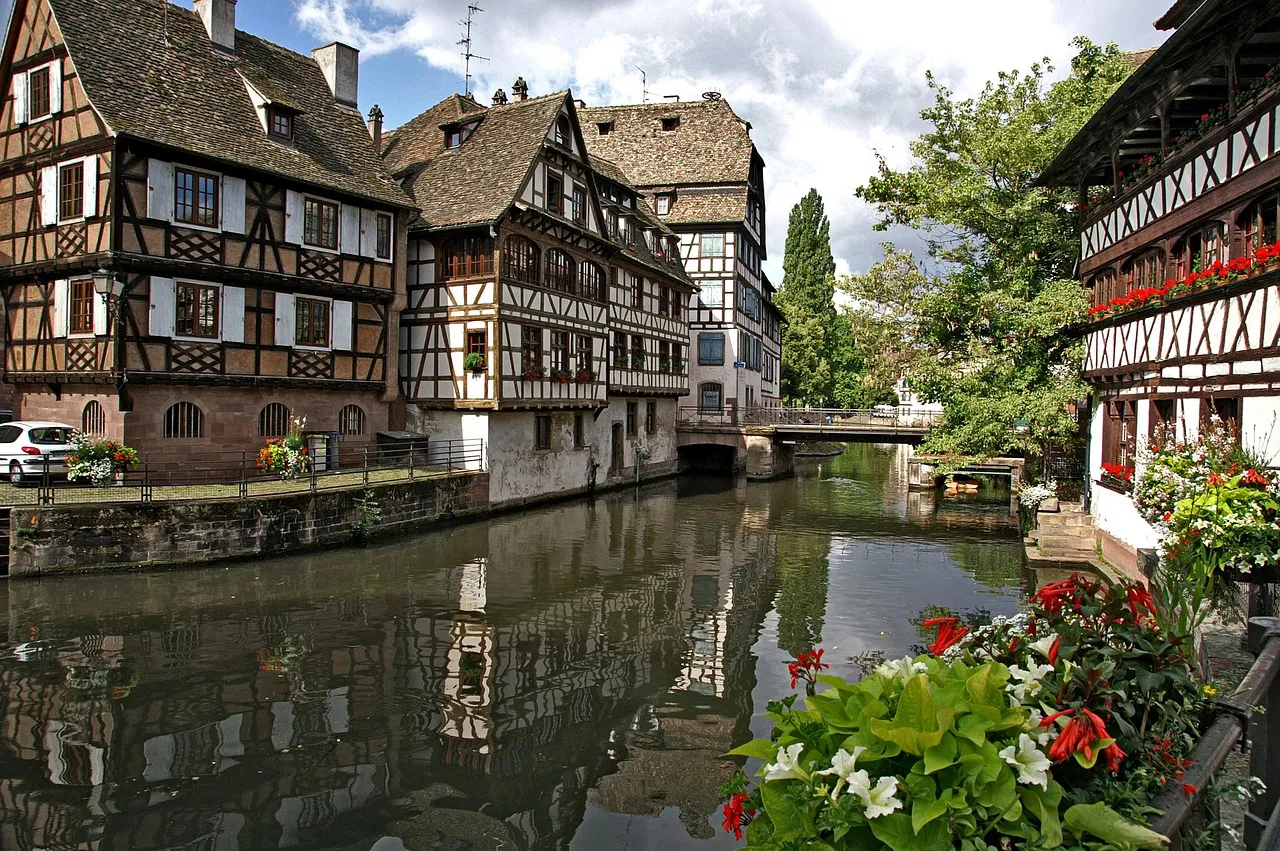
Strasbourg
France
City Overview
Strasbourg: A historic Franco-German crossroads where medieval charm meets European political power.
Access:
- By air: Strasbourg-Entzheim Airport (SXB), 10 km southwest of the city, with direct flights to major European hubs.
- By train: Strasbourg-Ville station, a high-speed rail (TGV) hub connecting to Paris (1h50), Frankfurt (1h50), and other European cities.
Main districts/zones:
- Grande Île (City Center): UNESCO-listed medieval core with half-timbered houses, the Cathédrale Notre-Dame, and key landmarks like Place Kléber.
- Neustadt (German Imperial Quarter): 19th-century grand boulevards, European institutions (EU Parliament, Council of Europe), and neoclassical architecture.
- Krutenau: Student-heavy, bohemian area with canals, nightlife, and the University of Strasbourg’s historic campus.
Quick Booking
Weather Forecast
23 °C
Practical Information
Emergency Contact Numbers
Police : 112 or 17
Fire : 112 or 18
Ambulance : 112 or 15
Currency & Conversion

0.88 EUR
Electrical Plugs
Voltage : Not available
Plug Type : C,E
Culture & Etiquette
Cultural Summary of Strasbourg
Historical Identity
Strasbourg is a city shaped by its dual French-German heritage. Founded by the Romans, it became a key medieval trading hub and later a center of the Protestant Reformation.
Its strategic location made it a contested territory, shifting between French and German rule. Today, it embodies a blend of Alsatian traditions and European influence, serving as the seat of the European Parliament.
Three Major Cultural Sites or Museums
Cathédrale Notre-Dame de Strasbourg
- A masterpiece of Gothic architecture.
- Features an astronomical clock and a towering spire.
- Symbolizes the city’s medieval grandeur.
Palais Rohan (Musée des Beaux-Arts, Musée Archéologique, Musée des Arts Décoratifs)
- A former prince-bishop’s palace.
- Houses fine arts, archaeology, and decorative arts collections.
- Reflects Strasbourg’s aristocratic and artistic history.
Petite France
- A picturesque historic district.
- Features half-timbered houses, canals, and cobblestone streets.
- Represents traditional Alsatian urban life.
Iconic Local Gastronomy
- Choucroute garnie – Sauerkraut with sausages, pork, and potatoes.
- Tarte flambée (Flammekueche) – Thin crust topped with crème fraîche, onions, and bacon.
- Baeckeoffe – A slow-cooked meat and potato stew.
- Kougelhopf – A sweet, yeast-based cake with raisins and almonds.
- Alsatian wines – Particularly Riesling and Gewürztraminer.