
 Back
Back 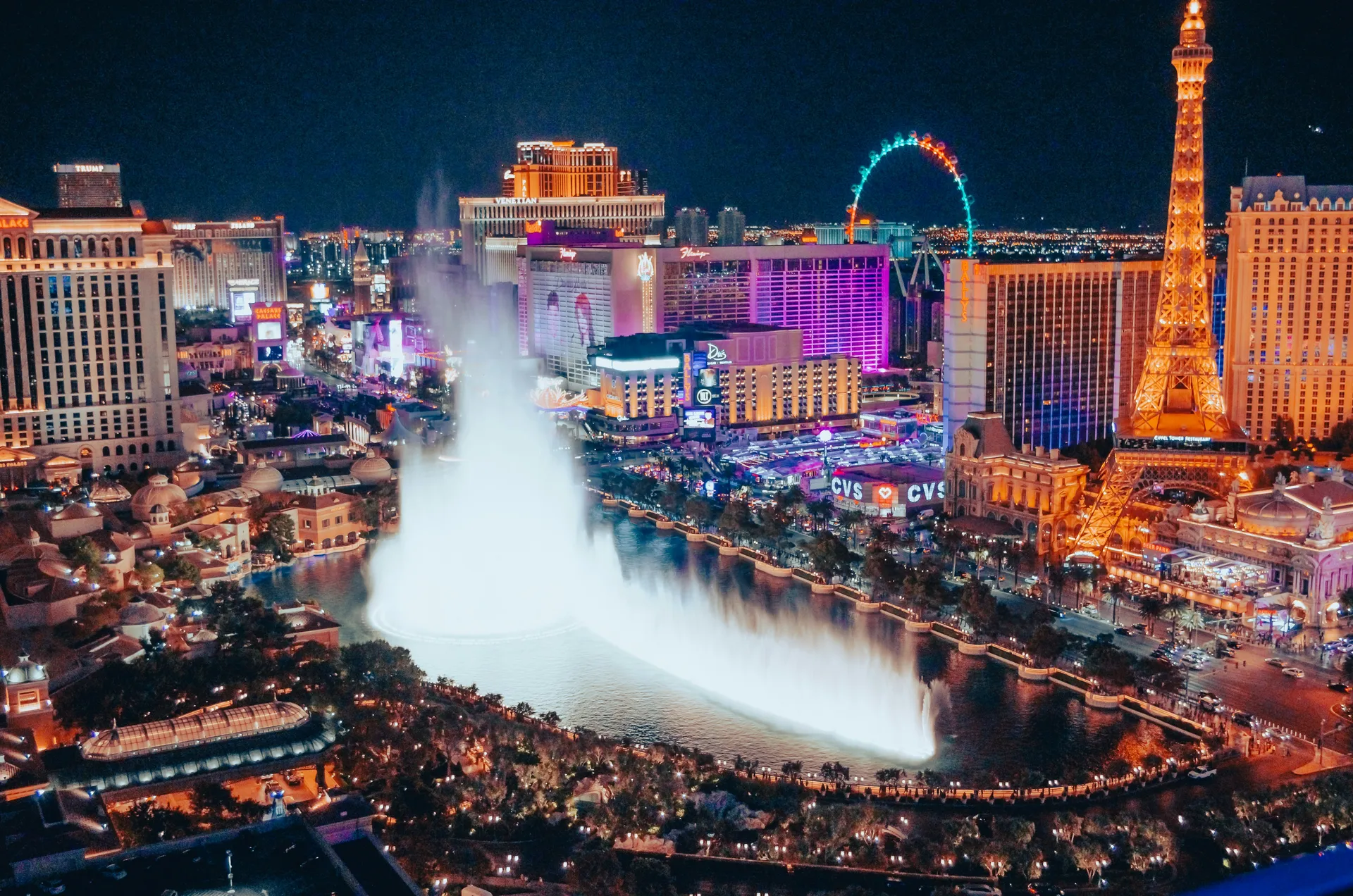
Las Vegas
United States
City Overview
"Las Vegas: The neon-lit desert playground where excess meets entertainment, 24/7."
Access
- By air: Harry Reid International Airport (LAS), 8 km south of the Strip, with direct flights from major global hubs.
- By road: Interstate 15 (connects to Los Angeles and Salt Lake City) or US-93/95 (links to Phoenix, Reno, and beyond).
Main Zones
- The Strip (Las Vegas Boulevard South): 6.8 km of mega-resorts, casinos, and iconic landmarks (Bellagio, Caesars Palace, The Venetian) – the city’s commercial and tourist core.
- Downtown (Fremont Street Experience): Historic gambling hub with cheaper casinos, vintage neon signs, and a pedestrian-only entertainment zone (LED canopy, free light shows).
- Off-Strip (e.g., Summerlin, Henderson): Residential/suburban areas with local dining, shopping, and outdoor recreation (Red Rock Canyon, Lake Mead), largely devoid of tourist crowds.
Quick Booking
Weather Forecast
32 °C
Practical Information
Emergency Contact Numbers
Police : 911
Fire : 911
Ambulance : 911
Currency & Conversion

1.00 USD
Electrical Plugs
Voltage : Not available
Plug Type : A,B
Culture & Etiquette
Cultural Analysis of Las Vegas (Based on Wikitravel)
Historical Identity
Las Vegas began as a small railroad stop in 1905. It transformed into a gambling hub in 1931 when Nevada legalized casino gaming.
The city’s identity shifted in the mid-20th century. It became synonymous with entertainment, luxury, and excess. The "Strip" emerged as a global symbol of nightlife and spectacle.
Today, Las Vegas blends its gambling roots with family-friendly attractions. It remains a city of reinvention, drawing millions for its shows, dining, and themed resorts.
Three Major Cultural Sites or Museums
The Mob Museum (National Museum of Organized Crime & Law Enforcement)
- Focuses on the history of organized crime and its impact on Las Vegas.
- Features interactive exhibits, artifacts, and stories of law enforcement’s battle against the mob.
Neon Museum
- A outdoor exhibit of vintage neon signs from old Las Vegas casinos and businesses.
- Offers guided tours showcasing the city’s mid-century visual culture.
Bellagio Gallery of Fine Art
- Displays rotating exhibitions of works by renowned artists.
- Hosts pieces from institutions like the Museum of Fine Arts, Boston, and the Smithsonian.
Iconic Local Gastronomy
Buffets
- A Las Vegas staple, offering all-you-can-eat dining at major resorts.
- Popular spots include Wicked Spoon (Cosmopolitan) and Bacchanal Buffet (Caesars Palace).
Steakhouses
- High-end cuts served in upscale settings.
- Notable options: SW Steakhouse (Wynn), CUT (Palazzo), and Bobby’s Burger Palace (for a casual twist).
Celebrity Chef Restaurants
- Many world-famous chefs operate restaurants in Las Vegas.
- Examples: Gordon Ramsay Hell’s Kitchen (Caesars Palace), Joël Robuchon (MGM Grand).
Casino Coffee Shops
- Classic 24-hour diners with retro Vegas charm.
- Peppermill Restaurant is a local favorite for its neon-lit ambiance.