
 Back
Back 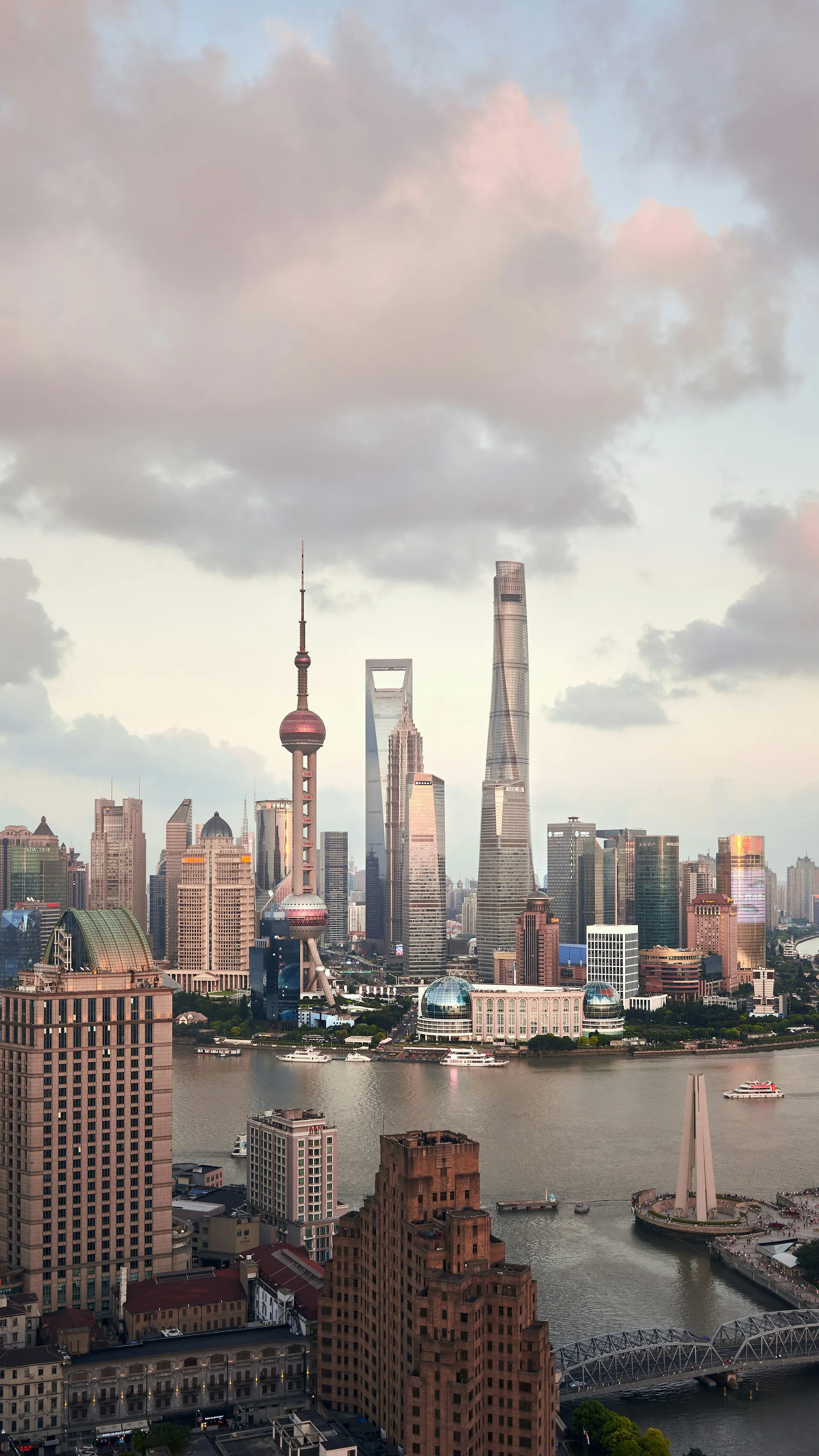
Shanghai
China
City Overview
Shanghai: China’s pulsating global metropolis where futuristic skylines collide with colonial relics and relentless energy.
Access:
- Air: Shanghai Pudong International Airport (PVG) – primary international hub; Shanghai Hongqiao International Airport (SHA) – domestic/regional focus.
- Rail: High-speed trains (e.g., Beijing–Shanghai line) terminate at Shanghai Hongqiao Railway Station or Shanghai Railway Station; slower trains arrive at Shanghai South Railway Station.
Three Main Zones/Districts:
Puxi (West Bank of Huangpu River): Core urban area; sub-districts:
- The Bund: Iconic waterfront with historic European architecture, nightlife, and skyline views.
- Nanjing Road: World’s longest shopping street (pedestrianized section: Nanjing Road Pedestrian Mall).
- Huangpu: Government/administrative center; People’s Square (cultural hub with museums/theaters).
- Jing’an: Upscale commercial/residential zone with Jing’an Temple.
- French Concession: Tree-lined streets, boutique cafés, and preserved colonial villas (focus: Xintiandi, Tianzifang).
Pudong (East Bank of Huangpu River): Modern financial/tech hub; landmarks:
- Lujiazui: Skyscraper cluster (Oriental Pearl Tower, Shanghai Tower, Jin Mao Tower, Shanghai World Financial Center).
- Zhangjiang Hi-Tech Park: "China’s Silicon Valley" (semiconductors, biotech, AI).
- Shanghai Disney Resort: Disneyland (Chuansha New Town).
Outer Districts (Suburban/Industrial):
- Baoshan: Port/steel industry; Wusongkou International Cruise Terminal.
- Minhang: Residential; Shanghai Jiao Tong University (Xuhui campus).
- Songjiang: "Nine Towns" (themed European-style developments); Shanghai Metro Line 9 terminus.
Quick Booking
Weather Forecast
Practical Information
Emergency Contact Numbers
Currency & Conversion

Electrical Plugs
Culture & Etiquette
Cultural Summary of Shanghai
Historical Identity
Shanghai is a city of contrasts—where ancient traditions meet rapid modernization.
Once a small fishing village, it grew into a global trading hub under colonial influence in the 19th century. Its unique blend of Chinese heritage and Western architecture defines its identity.
Today, Shanghai is China’s financial and cultural powerhouse, known for its cosmopolitan energy and deep-rooted local customs.
Three Major Cultural Sites & Museums
Yu Garden (Yuyuan)
- A classical Ming Dynasty garden.
- Features intricate rockeries, pavilions, and koi ponds.
- Surrounded by the bustling Yuyuan Bazaar, offering traditional crafts and snacks.
Shanghai Museum
- One of China’s best museums.
- Houses over 120,000 artifacts, including bronze, ceramics, and calligraphy.
- Free admission (with passport required).
The Bund (Waitan)
- Iconic waterfront with colonial-era buildings.
- Symbolizes Shanghai’s historical role as an international port.
- Best viewed at night when skyscrapers across the river light up.
Iconic Local Gastronomy
Xiaolongbao (Soup Dumplings)
- Steamed dumplings filled with pork and hot broth.
- Best enjoyed at Din Tai Fung or Jia Jia Tang Bao.
Shengjianbao (Pan-Fried Pork Buns)
- Crispy-bottomed buns with juicy pork filling.
- A popular breakfast street food.
Hairy Crab (Dazha Xie)
- A seasonal delicacy, best in autumn.
- Served steamed with vinegar and ginger dip.
- Traditionally sourced from Yangcheng Lake.